Career change at 40 - How to choose, test and make the move
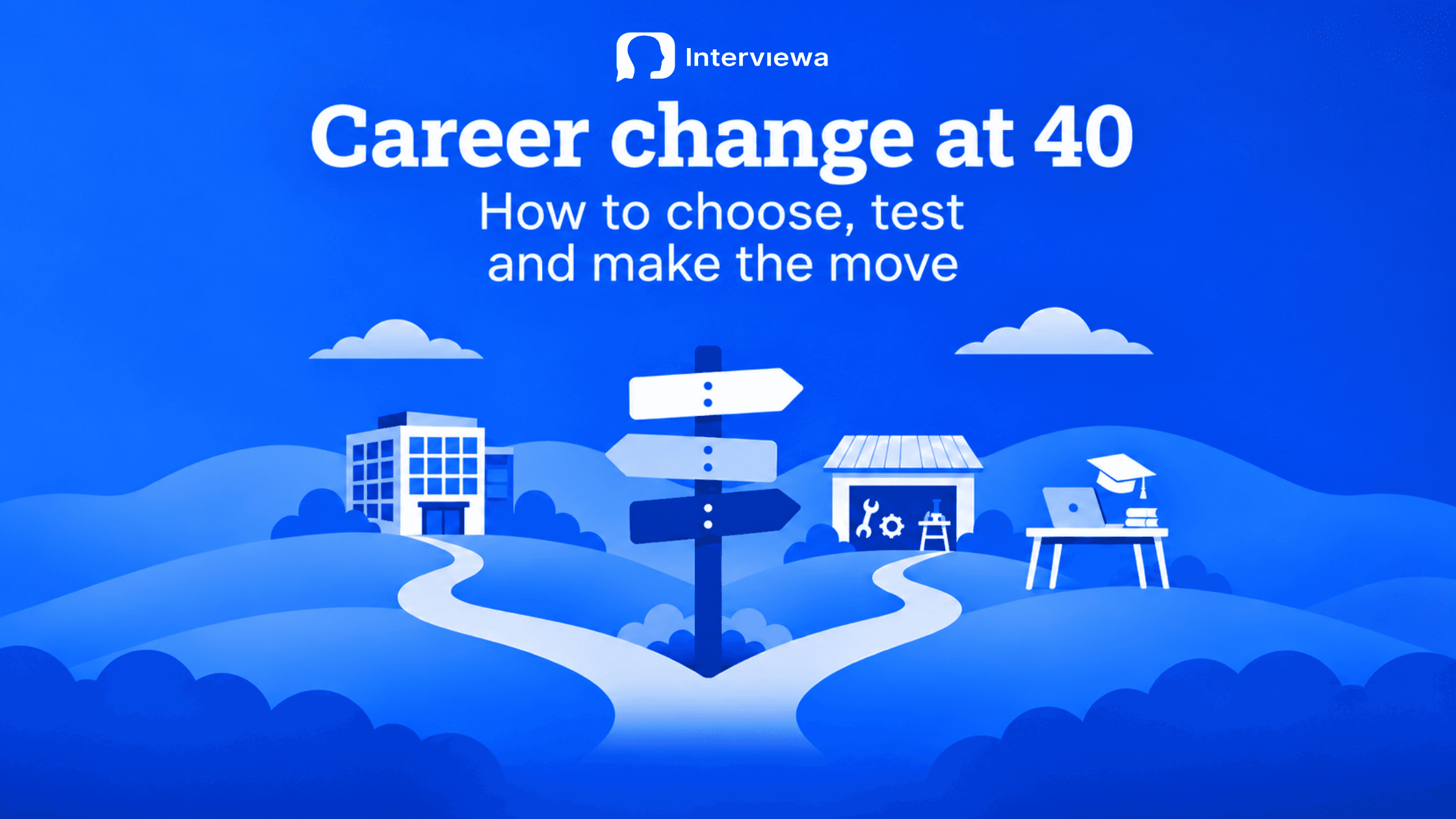
A career change at 40 is more common, and more realistic, than most people think. You probably have around 25 years of working life ahead of you, a set of skills employers value, and a much clearer idea of what you do not want. The hard part is usually not age. It is knowing what to change to, and how to get there without taking a reckless leap.
This guide gives you practical advice on choosing a new career path, testing it safely while you stay in your current job, and preparing for the interviews that get you hired.
Is 40 too old to change career?
No, you are also far from alone. A 2025 YouGov survey for the Employment Hero Annual Jobs Report found that one in three UK workers (33%) are considering a complete career change, including 20% of people over 55.
Separate research commissioned by Nottingham Trent University found that 47% of workers had thought about changing roles in the past 12 months, but 43% felt too scared to act, with age among the main reasons.
So the feeling that it is too late is common. The data suggests it is usually a confidence problem, not a time problem. Older workers bring judgement, reliability and experience that many teams actively look for.
Why do so many people want a career change at 40?
Priorities shift. Pay, recognition, meaning and a better work life balance tend to matter more once you have 15 or 20 years of work behind you.
A February 2026 Ciphr survey of 2,000 UK employees found that 30% of 35 to 44 year olds were looking, or planning to look, for different roles. Among everyone planning a move, the top reasons were feeling underpaid (36%), feeling undervalued (24%) and wanting a more rewarding job (23%).
It helps to be honest about which of these is driving you. If the problem is your manager or your employer, a new job in the same field may fix it. If the problem is the work itself, that is when changing careers makes sense.
How do you work out what career is right for you?
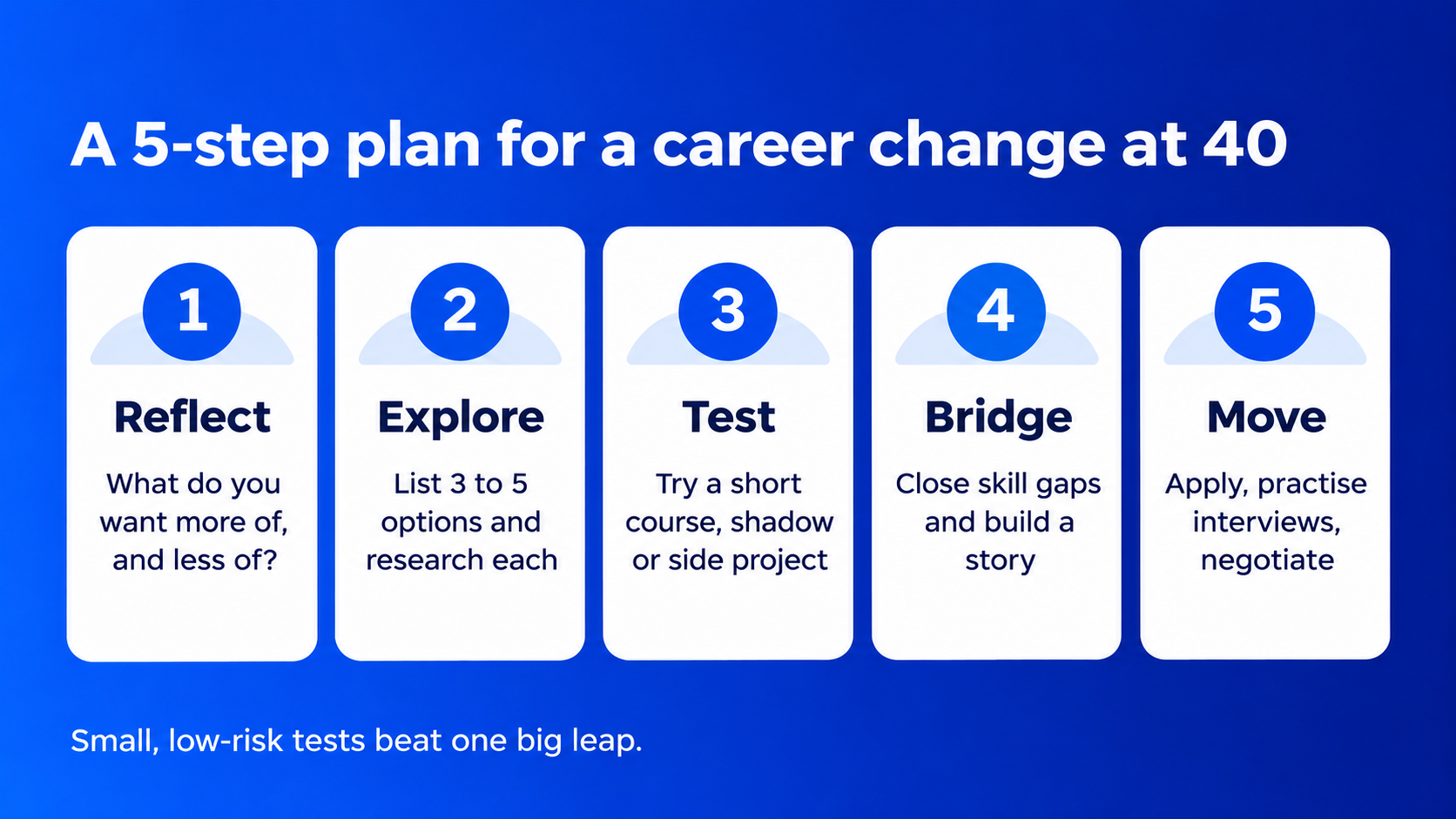
Start with what you want more of and less of in your working day, then turn that into three to five concrete career options you can research.
Not knowing what to do next is the most common sticking point. A survey of 11,567 UK career changers, found that 36% had no idea which industry or role they were aiming for.
These exercises can help you get unstuck:
- List the tasks you enjoy and the tasks that drain you in your current job. Look for patterns, not job titles.
- Write down what you need from a new career: income, location, hours, work environment and how much change you can handle.
- Ask five people who know you well what they think you are good at. You will often hear strengths you take for granted.
- Turn your notes into three to five career options and read real job adverts for each one.
Talking it through also helps. The National Careers Service offers free careers advice in England. You can also use an AI career coach to get a starting point at your own pace. Interviewa's AI career coach, is a 10-minute voice call with Eve, our AI interviewer. She asks about your background, interests and goals, then suggests five career paths with practical next steps.
What transferable skills can you take into a new career?
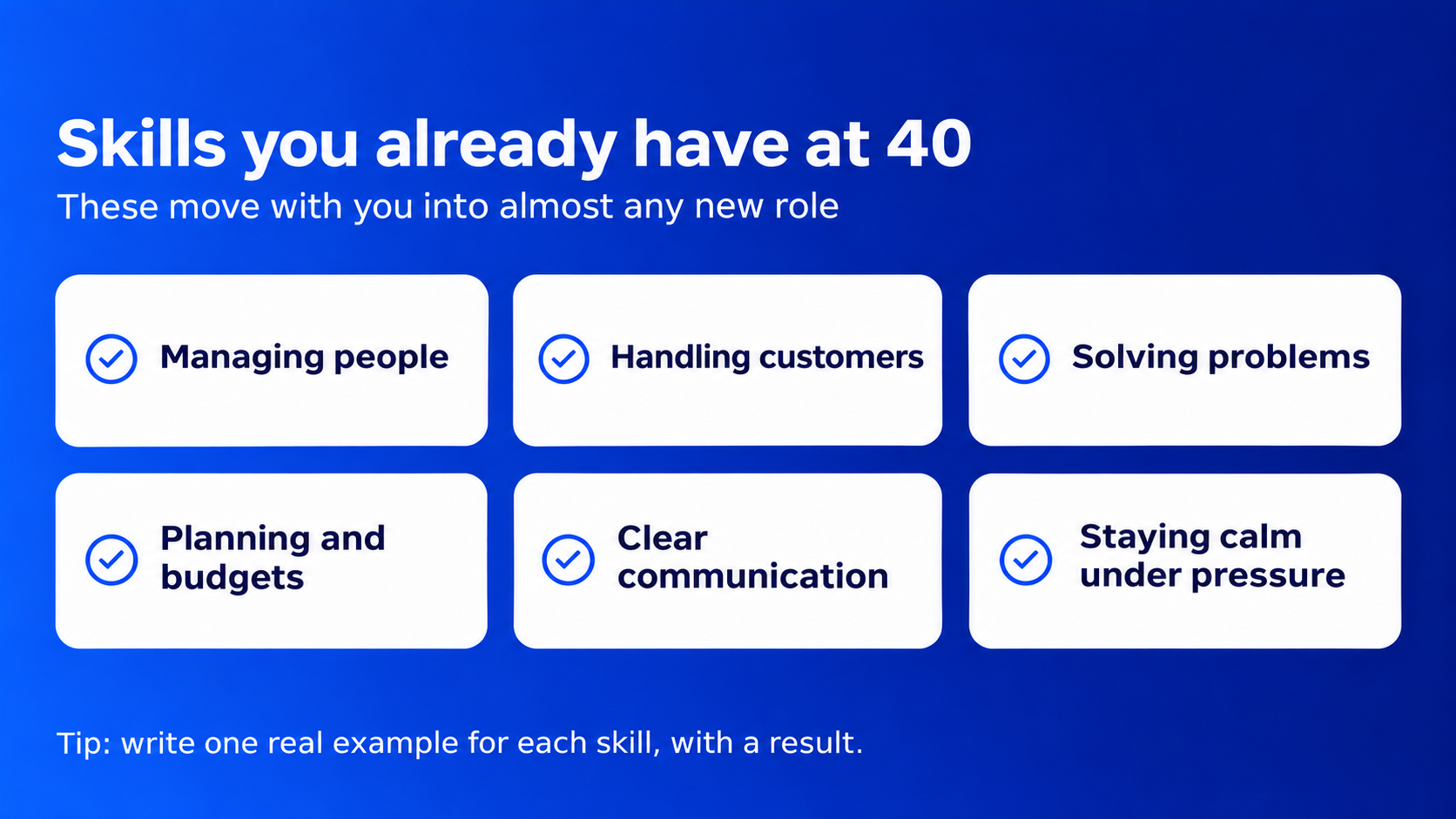
More than you think. Communication skills, managing people, solving problems, planning and handling pressure move with you into almost any sector.
By 40, you have usually led projects, dealt with difficult customers or colleagues, and made decisions with incomplete information. Those are transferable skills, and they are often what separates a strong candidate from someone with the right qualifications but little experience.
The trick is to translate them. Instead of saying "I managed a shop", say "I ran a team of eight, handled the rota and budget, and cut staff turnover". Write one real example for each skill, with a result. If you want a clear picture of your strengths and gaps, a structured AI skills assessment can give you a baseline before you spend money on training.
How can you test a new career before you quit?
Run small, low-risk experiments first, such as a short course, a weekend project or a conversation with someone already doing the job.
The Careershifters report found that 74% of career changers had been thinking about a change for a year or more, and concluded that clarity comes from small, low-risk experiments rather than analysis alone. In practice, that could mean:
- Having coffee or a video call with three people in your target role. Your professional network, including old colleagues on LinkedIn, is often the fastest way in.
- Taking a short online course to learn new skills and see if you enjoy the subject.
- Volunteering, freelancing or shadowing for a few days.
- Looking at free government-funded options, such as Skills Bootcamps in England.
Each test either builds your confidence or saves you from a costly mistake. Both are useful.
How do you get hired in a new field at 40?
Tell a clear, positive story about why you are changing, show the skills that carry over, and practise your interview answers out loud.
Hiring managers will almost always ask why you are changing careers. A good answer looks forward, not back: what draws you to the new career, what you have already done to prepare, and how your experience helps you add value quickly. Roles like project management, training, sales and operations often welcome people from different backgrounds because they lean on judgement and people skills.
Practise matters more than most people expect, especially if you have not had a formal interview in years. AI mock interviews let you rehearse answers to real questions, 24/7, and get instant feedback on where to improve before your next role is on the line.
Top tips for a successful career change at 40
- Decide what you are moving towards, not just what you are leaving.
- Keep your current job while you test your ideas.
- Build a simple money plan so you know how long you can manage a lower income, if you need to.
- Update your CV and LinkedIn around transferable skills, not past job titles.
- Practise interviews until your change story feels natural.
Frequently asked questions
Is 40 too late to retrain?
No. With the average UK age of leaving work now over 64 (ONS, 2025), you likely have decades of working life left to get value from new skills.
What are good career change ideas at 40?
Popular routes include teaching and training, project management, healthcare and social care, digital and data roles, and skilled trades. The best option is the one that matches your strengths, values and the lifestyle you want.
How long does a career change take?
It varies by industry and how much retraining you need. Many people think about it for a long time first: 74% of career changers in the Careershifters 2026 report had been considering a change for a year or more.
Is a career change at 50 different?
The steps are the same. At 50, it is often even more important to lead with experience, test ideas before committing, and choose training that pays back quickly.
Can an AI career coach help me change career?
Yes, as a starting point. An AI career coach can help you think through your options at any time and suggest career paths to explore. Use it alongside real conversations with people in the jobs you are considering.
Get started free
Not sure which direction to take? Have a 10-minute career call with Eve, our AI career coach, and get five career paths with next steps. Then practise for the interviews that follow with an AI mock interview.
Sources
- Department for Work and Pensions, Economic labour market status of individuals aged 50 and over, trends over time: September 2025 (ONS Labour Force Survey data). https://www.gov.uk/government/statistics/economic-labour-market-status-of-individuals-aged-50-and-over-trends-over-time-september-2025
- Employment Hero, 2025 Annual Jobs Report (YouGov survey), reported by Entrepreneur UK, 2 October 2025. https://uk.entrepreneur.com/news-and-trends/half-of-gen-z-workers-want-a-career-reset-but-fear-is/497850
- Nottingham Trent University survey of 2,000 workers and SME employers, reported by HRreview, 11 August 2025. https://hrreview.co.uk/hr-news/nearly-half-of-uk-workers-eyeing-exit-amid-lack-of-career-progression/383182
- Ciphr, survey of 2,000 UK employees (OnePoll, 4 to 8 February 2026), published 25 February 2026. https://www.ciphr.com/press-releases/underpaid-and-undervalued-a-quarter-of-employees-want-to-change-jobs-this-year
- Careershifters, State of Career Change Report 2026. https://www.careershifters.org/state-of-career-change-report