What is an AI SDR? A plain guide for UK sales teams
An AI SDR is software that does parts of a sales development representative's job: researching prospects, writing first-touch messages, handling follow ups and qualifying leads before a human seller takes over. It is good at speed and scale, but it still needs a person to set the rules, check the messaging and own the relationship.
This guide covers what these tools do, how they compare with other AI sales agents, what UK law says, the main risks and how to run a fair test.
What does an AI SDR actually do?
It takes on the repetitive tasks that fill a junior seller's week. Most tools cover some mix of these:
- Research: pulling customer data from your CRM, the web or a data provider, then summarising the details that make a prospect worth contacting.
- Writing: using generative AI to draft personalised emails, LinkedIn messages and follow ups that match your positioning.
- Sequencing: running multi-channel outreach on a schedule and stopping when someone replies or opts out.
- Qualifying: asking a few simple questions, applying lead scoring rules and helping good-fit leads book meetings with a person.
- Logging: writing notes and outcomes back to the CRM, so nobody has to do the data entry by hand.
Why does this matter? Salesforce's 2026 State of Sales research found that the average seller spends 40% of their time actually selling, or 41% in the UK. The same research says UK sellers expect AI agents to cut research time by 38%. Most of the value of sales AI comes from handing some of those hours back to your sales team.
How is an AI SDR different from a human SDR?
The simple answer: software is faster and never sleeps, while human sales reps are better at judgement, nuance and trust. The strongest teams use both.
- Speed of first reply. AI SDR: Seconds, at any hour. Human SDR: Depends on working hours.
- Volume. AI SDR: High, limited by your rules and data. Human SDR: Limited by time.
- Tone. AI SDR: Good with clear guidance, weaker without it. Human SDR: Natural, but varies.
- Tricky objections and edge cases. AI SDR: Follows a script, may miss subtext. Human SDR: Reads the room and adapts.
- Relationships. AI SDR: Starts the sales conversation. Human SDR: Owns it.
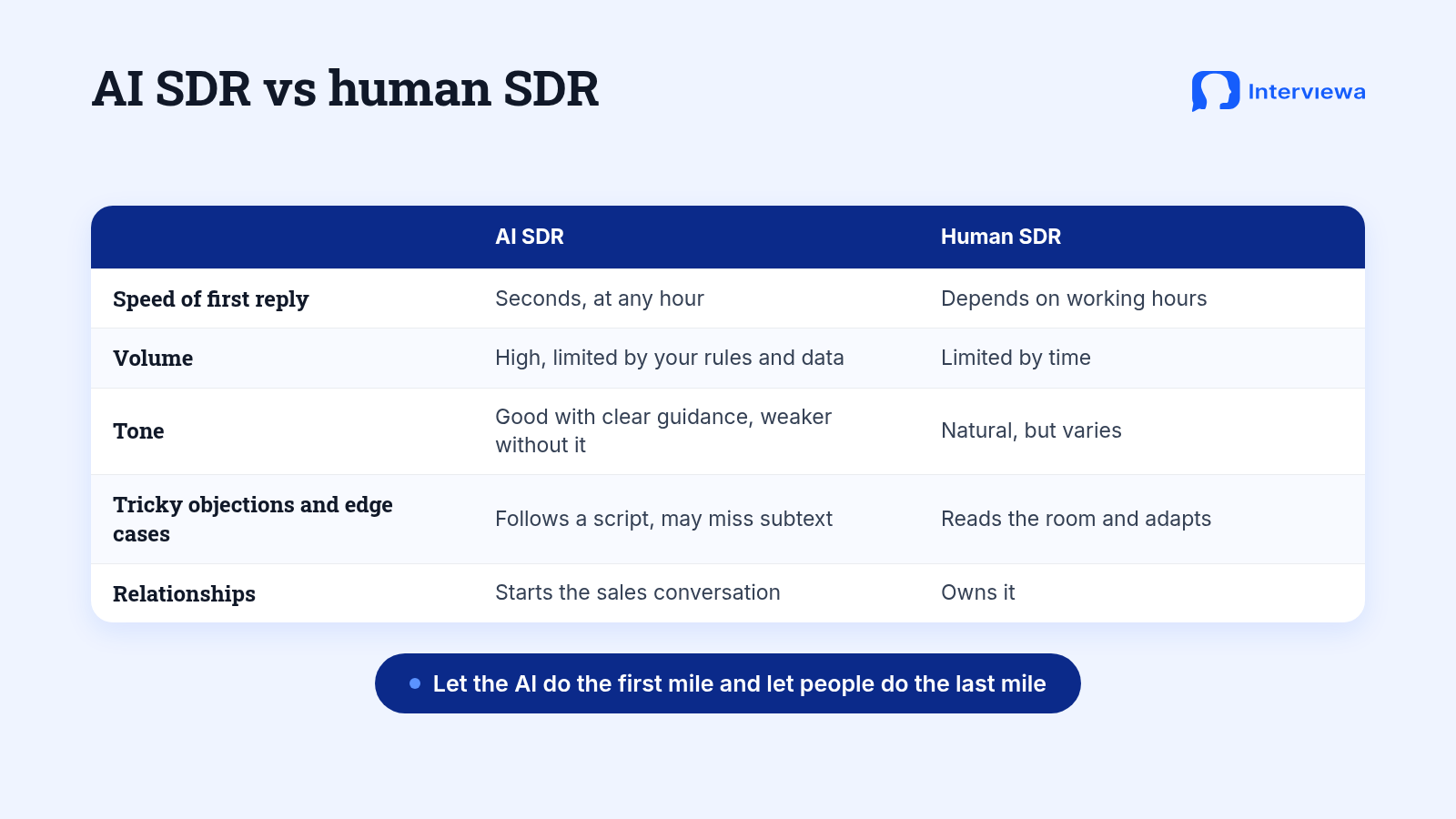
Let the AI do the first mile and let people do the last mile. An AI agent can make sure no inbound lead waits until Monday morning. A person should still run discovery, negotiate the deal and decide what to offer. That human touch is what builds customer relationships, and it is why human agents still matter in every good sales process.
AI SDR, AI BDR or AI sales agent: what is the difference?
The labels overlap, and vendors use them loosely. Roughly:
- AI SDR usually means prospecting plus early qualification, inbound or outbound.
- AI BDR is often the same job, sometimes with more focus on outbound and new markets.
- AI sales agent is the broadest term. It covers any AI agent that talks to customers, from a chat widget to a voice or video agent working in real time.
The label matters less than the channel. Ask whether the tool works by email, phone, chat or live video, and whether it handles inbound, outbound or both.
Where do AI sales agents help most: inbound or outbound?
Inbound is usually the safer place to start. The visitor has already shown interest, so a fast, helpful reply feels like good service and improves customer engagement when demand is highest. Success is also easier to measure: how quickly did you respond, and did it lead to a meeting?
Outbound lead generation can work too, but it carries more risks. Generic emails to people who never asked to hear from you get caught by spam filters and can hurt your brand.
Good inbound uses include:
- Instant answers on your website. A visitor asks what you do and who it suits, and the agent can respond straight away.
- Qualifying demo requests. A short conversation helps identify serious buyers before your team spends time on a call.
- Out-of-hours cover. Evenings and weekends are when many people finally get round to research.
- A clean handover. The best setups pass a written summary to a person, so nobody has to repeat themselves.
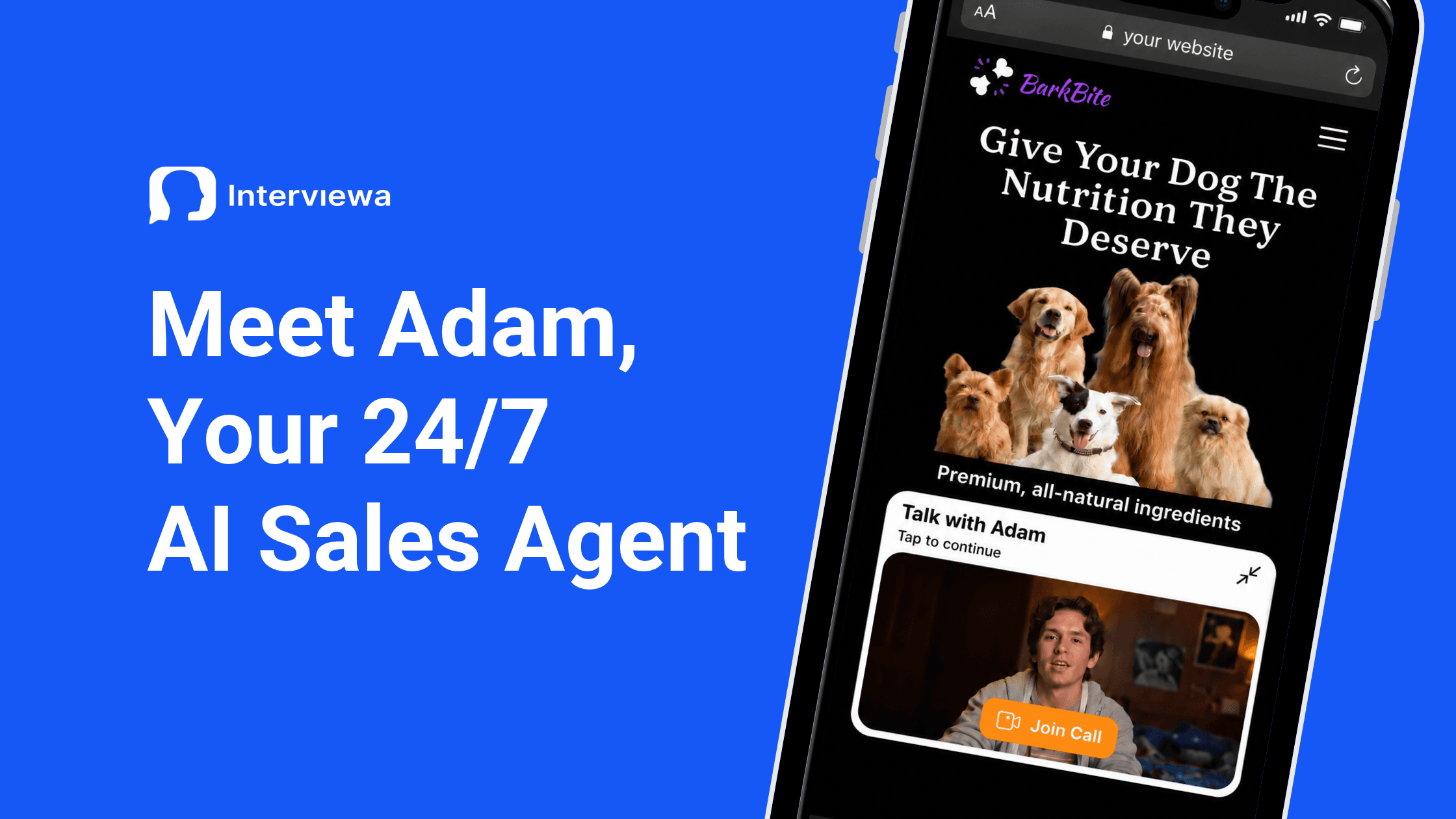
This is where video-based sales agents differ from an email-first tool. With Interviewa Sales, a website visitor can join a live video call with an agent that has learned about your business from your own website, ask questions, see your brochure presented during the call, and your team gets a summary of every conversation. Read more in our introduction to Adam, the Interviewa AI sales agent.
What are the UK rules for AI cold email and AI cold calling?
The short answer: UK direct marketing rules apply whether a message is written by a person or by artificial intelligence. If your tool sends emails or makes calls, the same law covers it.
The key rules sit in the Privacy and Electronic Communications Regulations (PECR) and UK GDPR. The ICO's business-to-business marketing guidance sets out the main points:
- Companies and LLPs are "corporate subscribers". You can email them without consent, but you must say who you are and give a valid way to opt out.
- Sole traders and some partnerships are treated like individuals. You need their consent, or the soft opt-in, first.
- Phone calls to both types of business are covered by PECR, and automated calls have stricter rules than live ones.
- UK GDPR still applies to personal data, such as a named employee's work email.
The ICO says this guidance is under review after the Data (Use and Access) Act, so check the latest version before you launch. If a tool cannot honour an opt-out at once, fix that first.
What are the risks of using an AI SDR?
The main risks are generic outreach, wrong facts and lost trust. All three are manageable with a clear plan.
- Sounding like everyone else. If every prospect gets near-identical copy, replies drop and spam complaints rise.
- Made-up claims. Generative AI can state things about your product that are not true. Give it approved facts and banned claims.
- Bad data. Out-of-date contact details lead to wasted effort and possible data protection problems.
- Over-automation. Some conversations need a person. Set clear rules for when the agent hands over.
How do you choose AI tools for sales development?
Start with the job you want done, not the feature list. Then check each option against these points:
- Channel fit: does it work where your customers are?
- Data source: where does prospect data come from, and is it lawful to use in the UK?
- Tone control: can you set your voice and the claims it must never make?
- Human review: can you approve messages before they go out, at least at first?
- Handover: does it pass a summary to a person and book time in their calendar?
- CRM integration: does it write back to your CRM so records stay accurate?
- Security: can the supplier show evidence such as GDPR compliance and Cyber Essentials certification?
- Reporting: can you see replies, meetings, opt-outs and revenue influenced, so you make data driven decisions?
If a vendor only talks about volume, be wary. Relevance is the hard part of sales automation.
How do you roll out an AI SDR without annoying people?
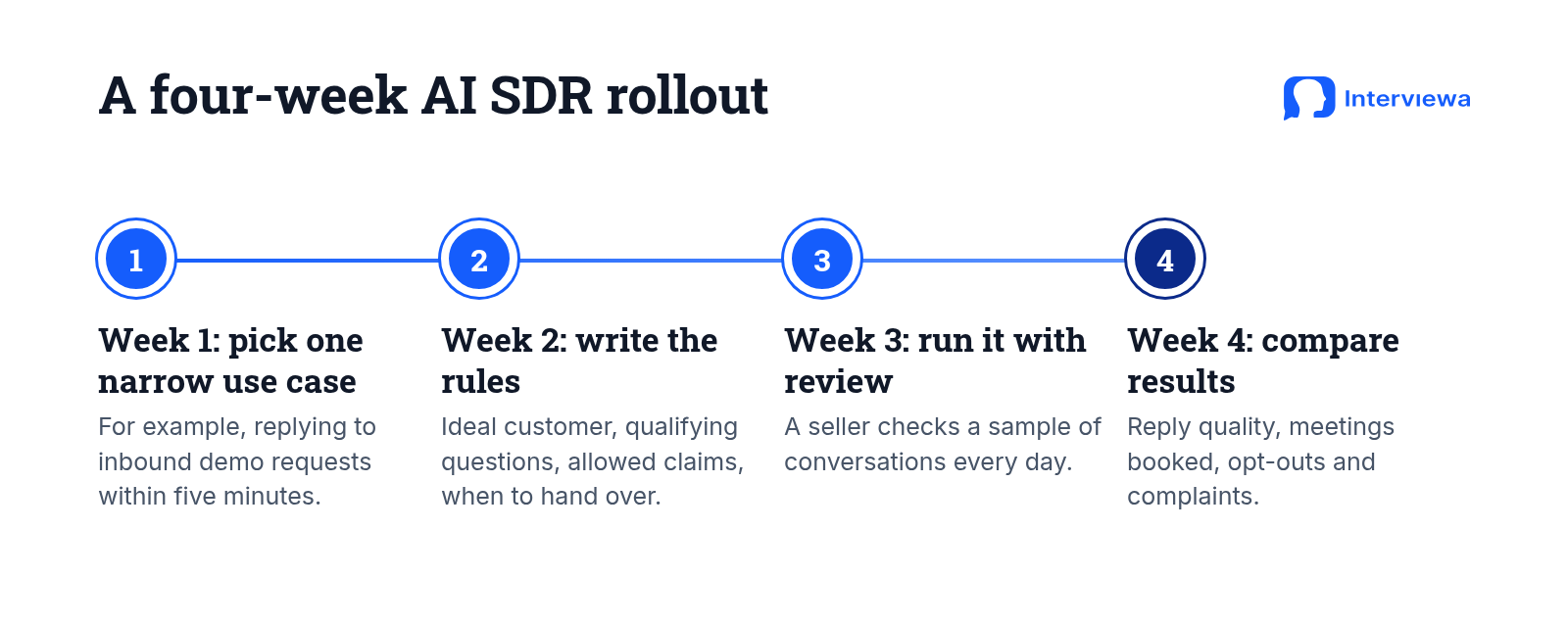
Go small, measure honestly and keep a human in the loop. A four-week plan suits most businesses.
- Week 1: pick one narrow use case. For example, replying to inbound demo requests within five minutes.
- Week 2: write the rules. Agree your ideal customer, the qualifying questions, the claims the AI may make and when it must hand over.
- Week 3: run it with review. A seller checks a sample of customer conversations every day and fixes anything that sounds off.
- Week 4: compare results. Look at reply quality, meetings booked, opt-outs and complaints against how the same work went before.
Your sellers still need practice for the sales calls the AI hands over. Many sales professionals rehearse discovery and objection handling with AI role-play, and our training tools can help.
Frequently asked questions
Are SDRs being replaced by AI? AI is more likely to change the role than remove it. It can take on research, first replies and logging, while sales professionals focus on conversations, judgement and closing deals.
What is AI cold calling? It means using AI to place or support outbound sales calls, from dialling to live voice conversations. In the UK, PECR covers marketing calls, and automated calls face stricter rules.
Is AI in sales legal in the UK? Yes, but the usual rules apply. PECR covers marketing emails and calls, and UK GDPR covers personal data. Check the ICO's guidance first.
What is the difference between an AI SDR and a chatbot? A basic chatbot answers questions from a script. An AI SDR is built around a sales job, such as qualifying leads and booking meetings, and usually connects to your CRM and calendar.
How do I know if it is working? Track meetings booked, reply quality, opt-outs and complaints, not just messages sent. Review real conversations weekly.
Get started free
Want to see how a live AI video conversation feels from the visitor's side? Get started free and try an agent trained on your own website. Prefer to talk it through first? Book a demo with our team.