Objection handling: techniques, examples and role play scenarios
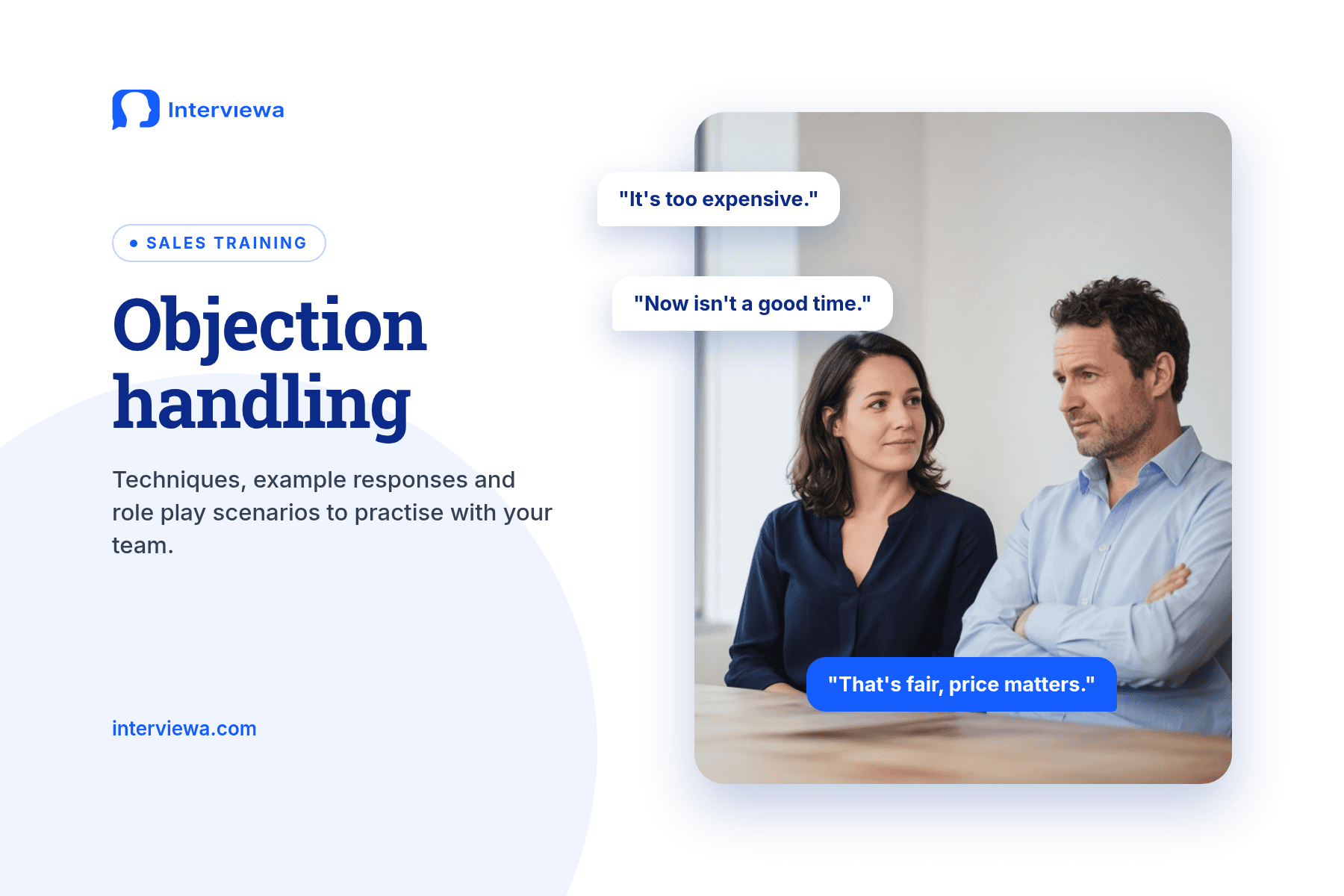
Objection handling is how you respond when a prospect raises a concern that stops a sale moving forward. Good objection handling means listening first, understanding the real worry behind the words, and then answering it honestly, rather than pushing harder.
Most sales professionals know this in theory. The gap is practice. This guide gives you a simple method, example responses for the most common sales objections, and a set of role play scenarios you can run with your team this week.
What is objection handling in sales?
It is the part of the sales process where you deal with a prospect's concerns about price, timing, trust or fit. An objection is not the same as a rejection. It usually means the buyer is still thinking, and wants more information before deciding.
Treat customer objections as signals, not deal breakers. A prospect who says "it's too expensive" might mean the value is unclear, the budget sits with someone else, or they are comparing you with a cheaper current solution. Your job is to find out which one it is.
What are the most common sales objections?
Most sales objections fall into a handful of types. If your sales reps can handle these six common objections, they can handle most sales calls, from a cold call to a renewal late in the sales cycle.
- Price. What the prospect says: "It's too expensive.". What it often means: The value is not yet clear, or there are budget constraints.
- Timing. What the prospect says: "Now isn't a good time.". What it often means: Other priorities, or no urgency yet.
- Authority. What the prospect says: "I need to check with my boss.". What it often means: They are not the decision maker, or need help selling it internally.
- Need. What the prospect says: "We don't really need this.". What it often means: The pain points have not been uncovered.
- Trust. What the prospect says: "I've never heard of you.". What it often means: Perceived risk feels high.
- Competition. What the prospect says: "We already use another provider.". What it often means: Switching feels like effort, or they are happy enough.
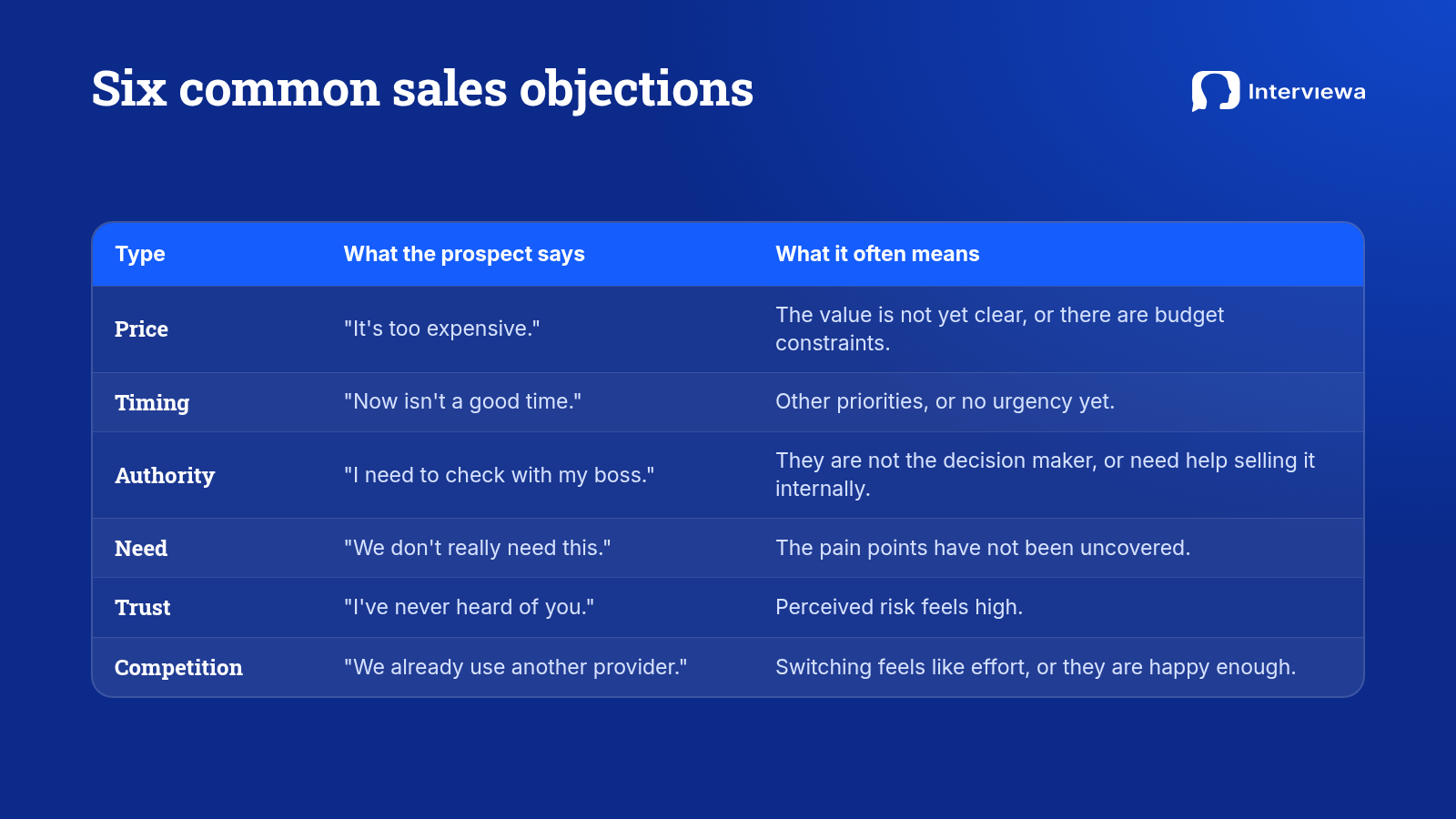
Knowing the types of sales objections is the first win. It tells your reps what to ask next.
How do you handle objections? A four-step method
Use a short, repeatable process. Here is one that works on the phone, on video and face to face.
- Listen fully. When a prospect expresses concern, let them finish so you hear the objection fully. Do not respond immediately or rush to defend the product. Active listening is the most underrated sales skill.
- Acknowledge. Show you heard the concern and treat it as a valid concern. "That's fair, price matters" builds trust far faster than "Actually, we're very competitive."
- Explore. Ask one open question to find the underlying issues behind the specific objection. "When you say expensive, is that compared with what you use now, or with the budget you have?"
- Respond and check. Answer the real concern with relevant information, such as customer references, success stories from other clients, a clearer value proposition, payment plans or a trial period. Then check: "Does that help?"
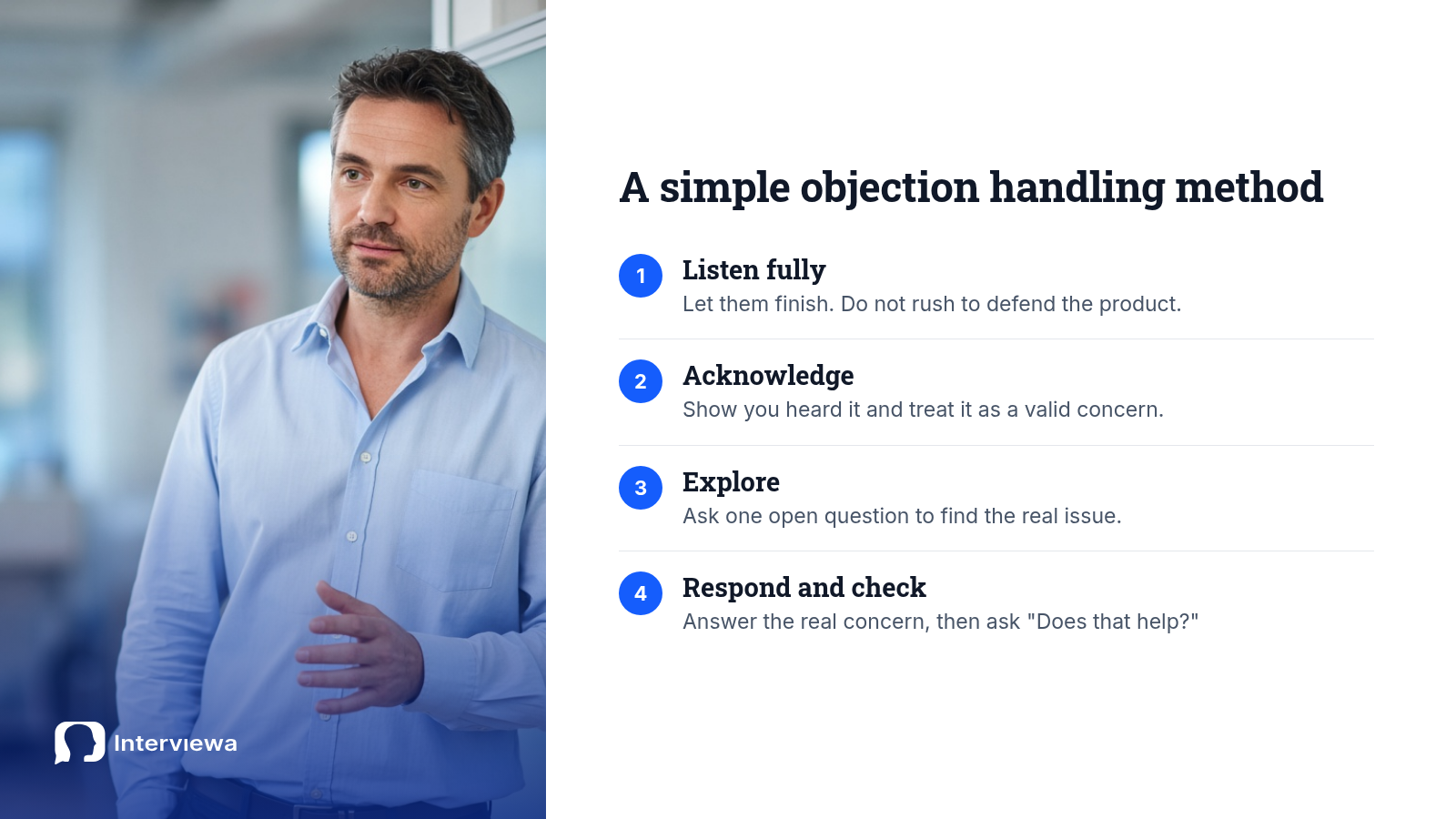
The explore step is where most reps fall down. They answer the objection they expect, not the real objection the prospect has. That is the difference between effective objection handling and arguing.
What do good responses sound like?
Good responses are calm, specific and honest. Here are example answers for each type. Adapt the words to your own product or service; never read them like a script.
Price objection. "I understand. Can I ask what you're comparing it with? If it helps, most teams look at the time it saves each month rather than the headline cost. Would it be useful to work through that together?"
Timing objection. "Makes sense. What's taking priority right now? If it's easier, we could agree a date to pick this up again, so it doesn't fall off your list."
Authority objection. "Of course. Who else will be involved in the decision? I'm happy to put together a one-page summary, or join a short call so you're not left explaining it alone."
Need objection. "That's fair. How are you handling it at the moment? If the current approach is working, we may not be the right fit, and that's fine to say."
Trust objection. "Good question to ask. We're a newer name, so here's what we can share: who we work with, how data is handled and what a trial looks like. What would you need to see to feel comfortable?"
Competition objection. "Great, so you already see the value. What do you like about your current solution, and is there anything you'd change?"
Notice that each response ends with a question. That helps you maintain momentum and move the sale forward instead of ending in a stand-off.
Which role play scenarios help teams practise?
Role plays work best when they are short, realistic and based on real objections your team hears. Use these five scenarios as a starting point. Each one should take about ten minutes, including feedback.
Scenario 1: The price shopper. The buyer runs a small business and has a quote from a cheaper competitor. Brief for the "buyer": push on price twice before revealing that the real issue is cash flow this quarter.
Scenario 2: The busy manager. The buyer says "send me an email" within the first minute. Brief: only engage if the rep asks a sharp question about their current priorities.
Scenario 3: The gatekeeper. The buyer likes the product but is not the decision maker. Brief: say yes to everything, but avoid committing to a next step until the rep asks who else is involved in the decision making process.
Scenario 4: The happy customer of a rival. The buyer is fairly content with their current provider. Brief: mention one small frustration only if asked an open question.
Scenario 5: The sceptic. The buyer has had a bad experience with a similar product. Brief: be blunt and stay sceptical unless the rep acknowledges the past experience before talking about features.
The hidden brief matters. It forces reps to dig deeper rather than rush to a pitch.
How do you run objection handling practice that sticks?
Keep it frequent, short and scored against the same few criteria. One long workshop a year changes very little, and successful objection handling comes from repetition.
Use this checklist when you observe a role play:
- Did the rep let the buyer finish before speaking, and keep a calm, open tone?
- Did they acknowledge the concern in their own words?
- Did they ask at least one open question to find the real objection?
- Was the response specific to that buyer, not a generic line?
- Did they check the answer landed, then agree a next step?
- Did they build trust, staying honest with no pressure tactics or overpromising?
That last point matters in the UK. If you sell regulated products, rules such as the FCA's Consumer Duty set clear expectations on how firms treat customers. Good objection handling should address potential concerns and help buyers make an informed decision, not corner them.
A few habits make practice stick:
- Collect real objections. Ask reps to log the exact words prospects use on calls for two weeks. Build role plays from that list.
- Rotate roles. Playing the prospective buyer teaches reps how objections feel from the other side of the buying process.
- Practise one objection at a time. Start with the first objection your team hears most. Depth beats breadth.
- Repeat until it is natural. The goal is a calm reply under pressure, not a memorised line.
Can AI help with objection handling practice?
Yes, as an extra rep for practice between sessions. The main benefit is availability: people can rehearse whenever they have ten spare minutes, without booking a manager's time.
Interviewa Training includes a Sales Pitch option, where you practise on video with Eve, our AI interviewer, and get personalised feedback afterwards. It works well alongside live role plays with a manager, who still brings the judgement and context about your real customers. If you lead a team, you can book a demo to talk through how it could fit your training plan.
FAQ
What is the best technique for handling objections?
There is no single best line. A simple process of listen, acknowledge, explore and respond works across most situations because it focuses on the real concern.
What are the most common objections in sales?
Price, timing, authority, need, trust and competition cover most of what sales reps hear. Price objections are often value objections in disguise.
How often should sales teams practise objection handling?
Little and often works best. A ten-minute role play before the next sales call beats a full-day workshop once a year. Proactive objection handling, where reps raise likely concerns before the buyer does, also gets easier with practice.
Should reps use objection handling scripts?
Use scripts as a starting point, not something to read aloud. Prospects can hear a script, and it makes building rapport harder.
Is objection handling only for sales teams?
No. Handling customer objections matters in customer service, account management, recruitment and fundraising too, and the same method applies to any potential customer.
Get started free
Objection handling improves with practice, not theory. Pick one common objection, run a short role play this week and score it with the checklist above. To add solo practice between sessions, get started free with Interviewa Training and try the Sales Pitch option. You can also see how our AI sales agent talks to website visitors.