Cold calling in the UK: rules, a simple script and what still works
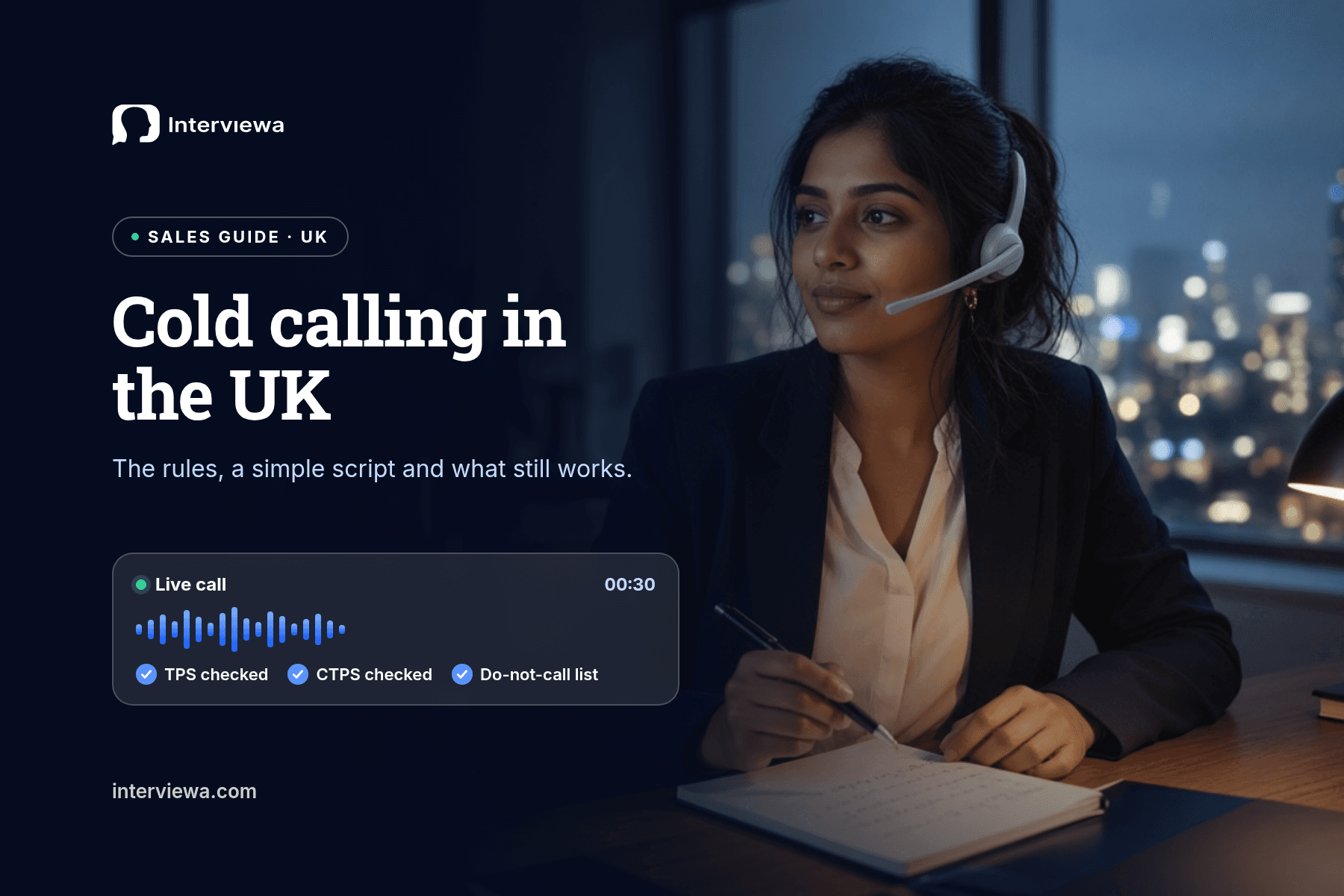
Cold calling is phoning a potential customer who has not asked to hear from you, to start a sales conversation. In the UK it is legal for live calls, as long as you screen numbers against the Telephone Preference Service (TPS) and Corporate TPS (CTPS), respect anyone who opts out and always say who is calling.
Cold calling has a bad reputation, mostly earned by pushy scripts and badly targeted lists. It also interrupts someone's day without warning, so every second has to earn the next. Done well, it can still be a quick way for a sales team to reach decision makers, build a sales pipeline and learn what prospects care about. This guide covers the UK rules, preparation, a script to adapt and follow-up, including where an AI sales agent helps.
Is cold calling legal in the UK?
Yes, live cold calling is legal in the UK, but it is regulated by the Privacy and Electronic Communications Regulations (PECR), which the Information Commissioner's Office (ICO) enforces.
The ICO's telephone marketing guidance sets out the main rules for live marketing calls. You must not call:
- anyone who has told you they do not want your calls;
- any number registered with the TPS or CTPS, unless that person has specifically consented to your calls, even if they are an existing customer;
- anyone about claims management services, unless they have specifically consented;
- anyone about pension schemes, unless you meet the strict conditions the ICO sets out for those calls.
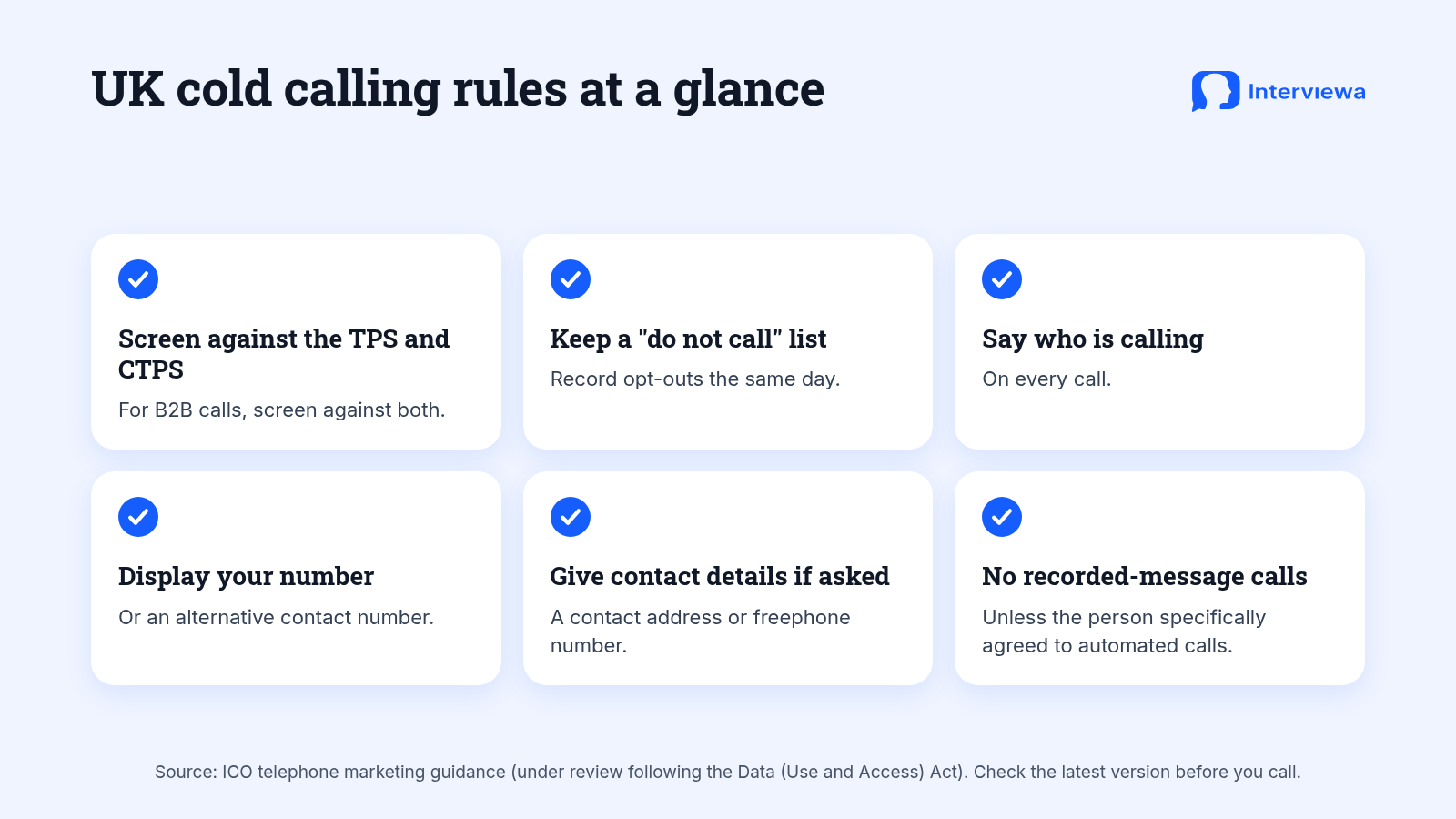
On every call you must say who is calling, display your number (or an alternative contact number) and give a contact address or freephone number if asked. The ICO notes this guidance is under review following the Data (Use and Access) Act, so check the latest version before you build a calling programme.
Do the rules differ for B2B cold calling?
The rules are the same for business calls, but you need to screen against two lists. Some businesses, such as sole traders and some partnerships, register with the TPS. Companies and other corporate bodies register with the CTPS.
So for B2B calls, the ICO says you should screen against both the TPS and CTPS, plus your own "do not call" list. If someone says "please don't call again", record it the same day.
Can you use automated or AI calls for cold calling?
Not without specific consent. Automated marketing calls, meaning calls that play a recorded message, are covered by stricter rules. The ICO says general marketing consent is not enough. The person must have specifically agreed to receive automated calls from you.
This matters as AI voice tools become common. If you want AI in your outreach, use it where the prospect chooses to engage, such as on your website, rather than to dial cold lists.
How should you prepare before a cold call?
Preparation decides most cold calls before you dial. A little basic research on each of your prospects goes a long way. Spend a few minutes on each prospect, or build a short research routine for each segment.
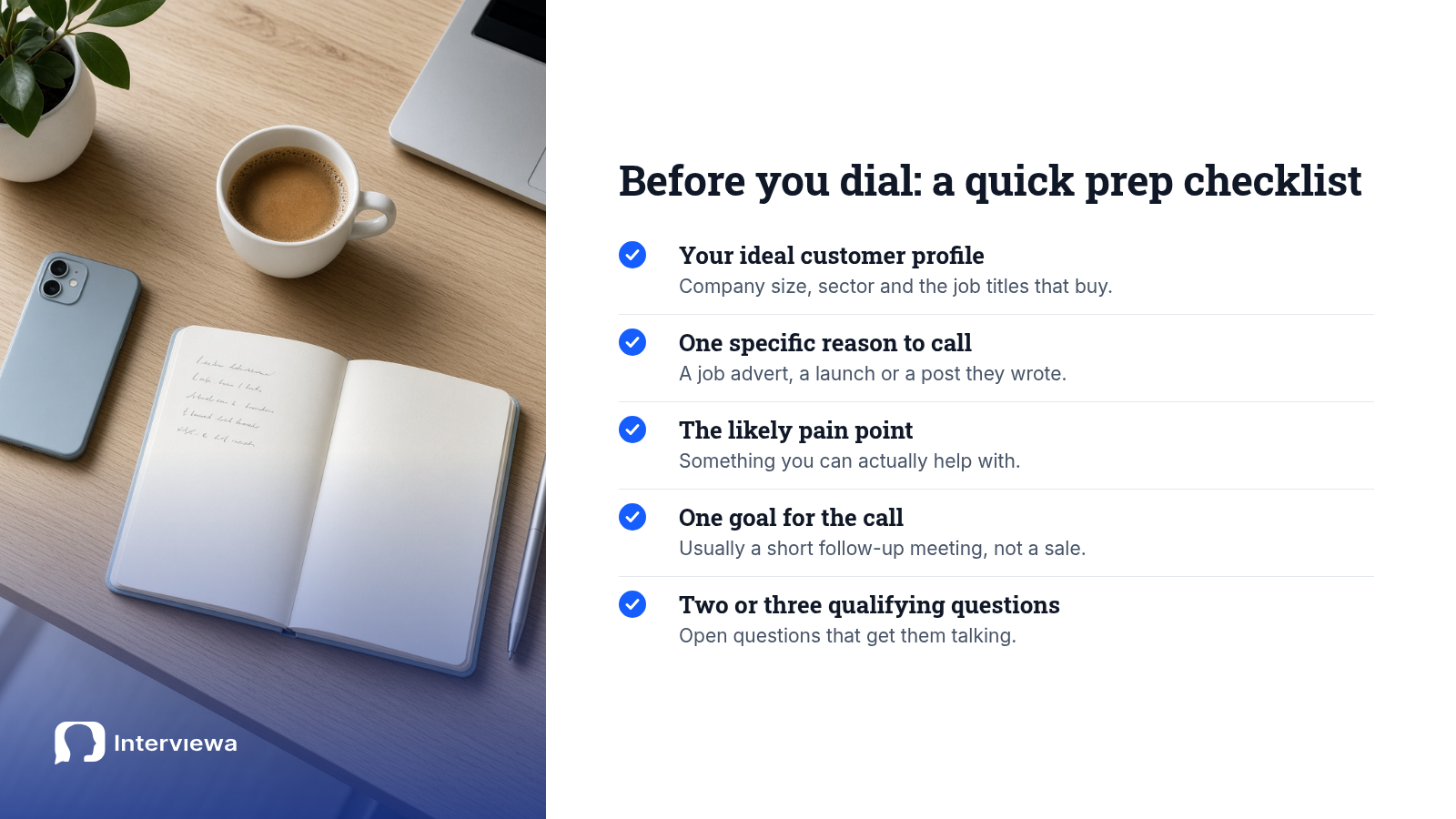
Before each call, know:
- Your ideal customer profile. Company size, sector, buyer persona and job titles that usually buy from you.
- One specific reason to call. A new funding round, a job advert, a product launch or a post they wrote.
- The likely pain point. What specific pain point might this person have that you can actually help with?
- Your one goal for the call. Usually a short follow-up meeting, not a sale.
- Two or three qualifying questions. Open discovery questions that get the prospect talking about their situation.
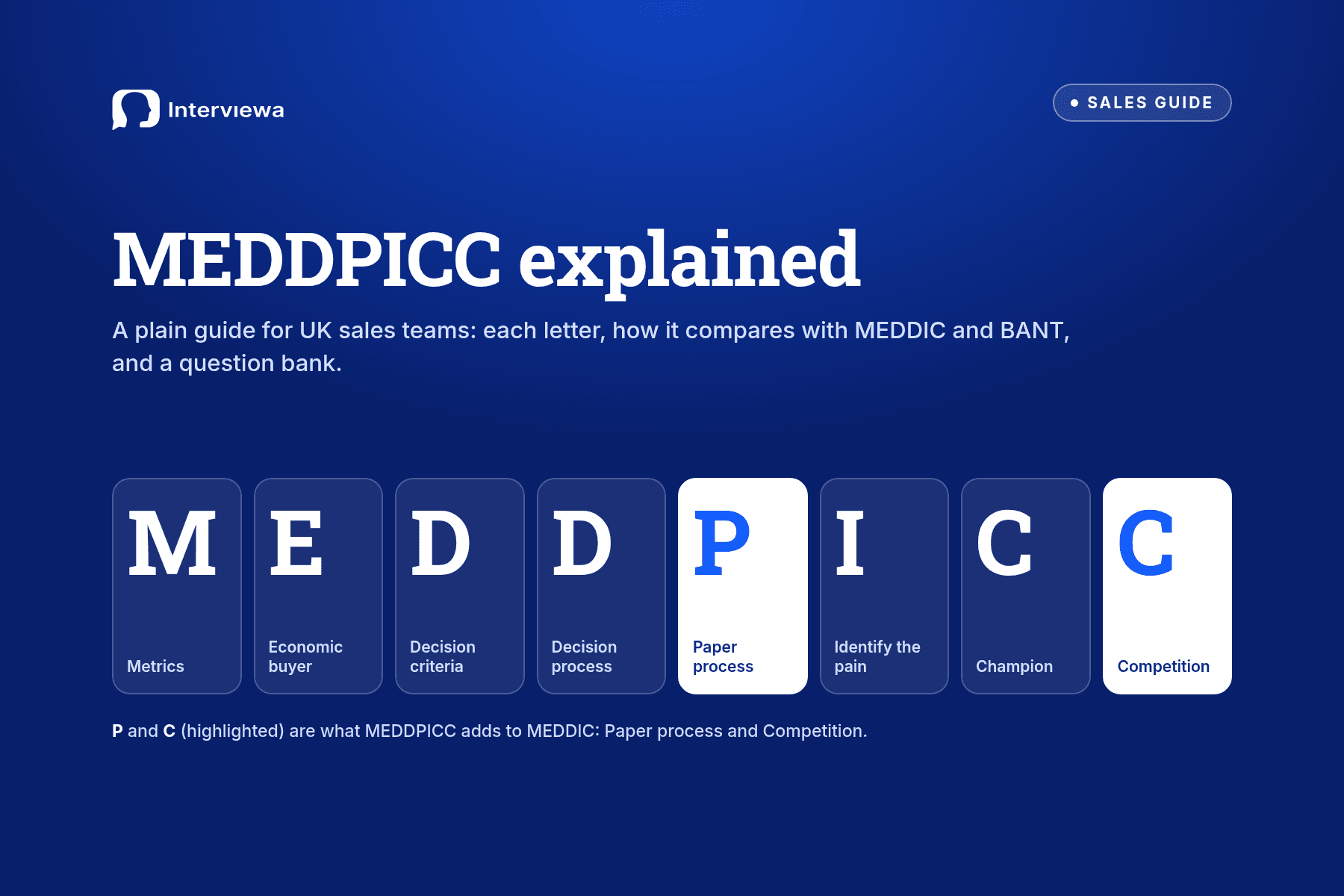
Good lead qualification starts here. Cold calling works best on qualified leads: if you cannot name a real reason this company might care, they probably belong further down the list. A simple lead scoring rule, such as sector plus a recent buying signal, helps sales reps decide who to call first. Frameworks such as MEDDPICC help later in the sales process, but on an initial cold call you only need to learn whether there is real pain and a reason to talk again.
What is a good cold calling script?
A good script is a structure, not a speech. It should get you to a relevant question within 30 seconds and leave room for a real conversation.
Here is a simple B2B script to adapt:
- Opening line. "Hi [name], it's [your name] from [your company]. I know I'm calling out of the blue. Have you got 30 seconds for me to explain why, and then you can tell me if it's worth carrying on?"
- Reason for the call. "I saw you're hiring three new account managers this quarter. We help sales teams like yours get new starters up to speed faster."
- Discovery question. "How are you handling onboarding at the moment?"
- Listen and dig. Ask one or two follow-up questions based on what they say.
- Next step. "Would it be worth a 20-minute call next week to show you how others have approached this?"
- Close politely either way. If they say no, thank them and ask if there is a better person or a better time.
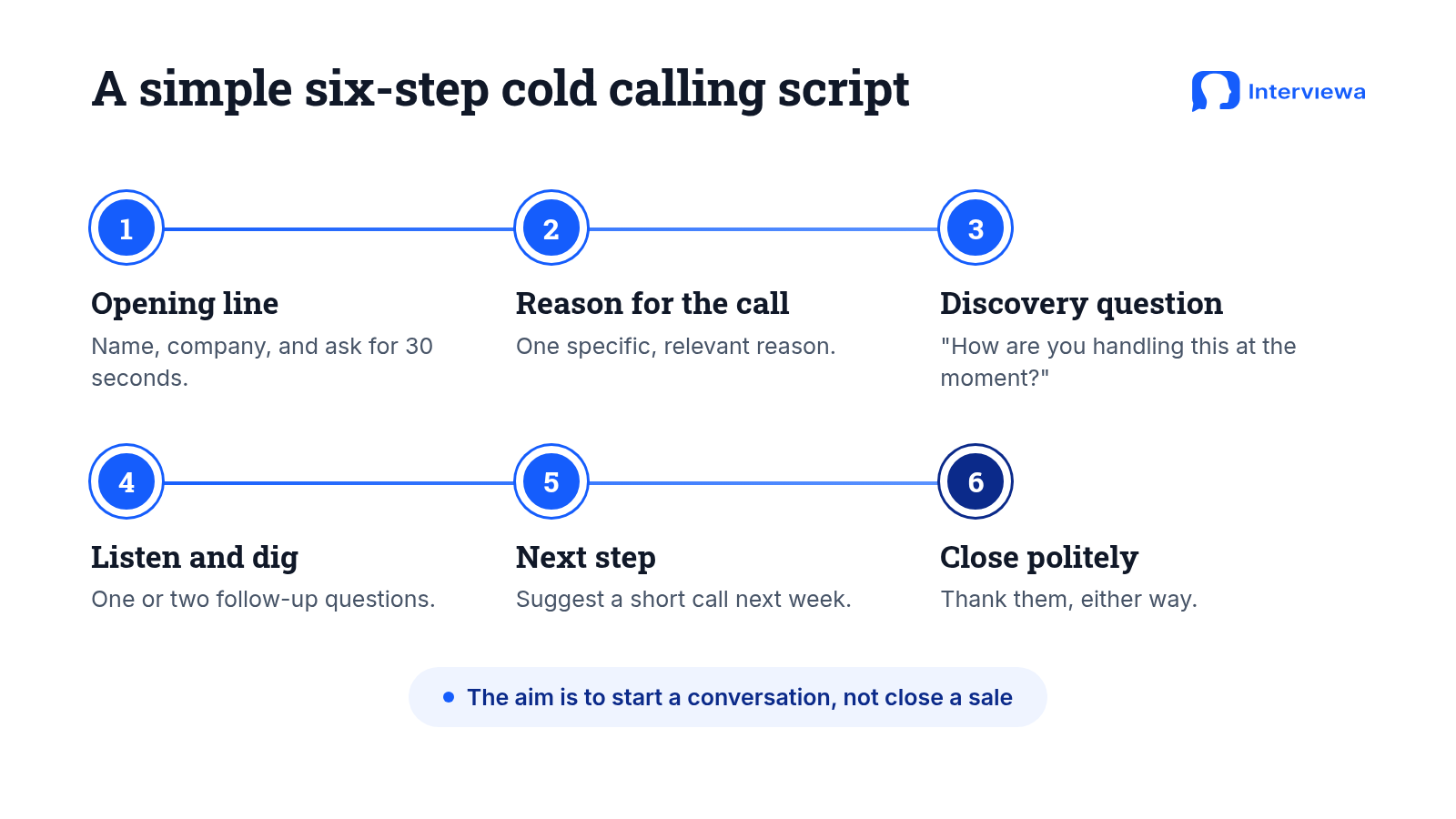
The script avoids a long company history, a feature list and pressure. Its aim is to start a conversation, not close a sale.
What are the best cold calling tips?
The best cold calling tips are about respect and relevance. These habits make the biggest difference for most UK sales reps:
- Ask permission early. Giving the prospect an easy way out makes them more likely to stay.
- Lead with them, not you. Talk about their situation before your product or service.
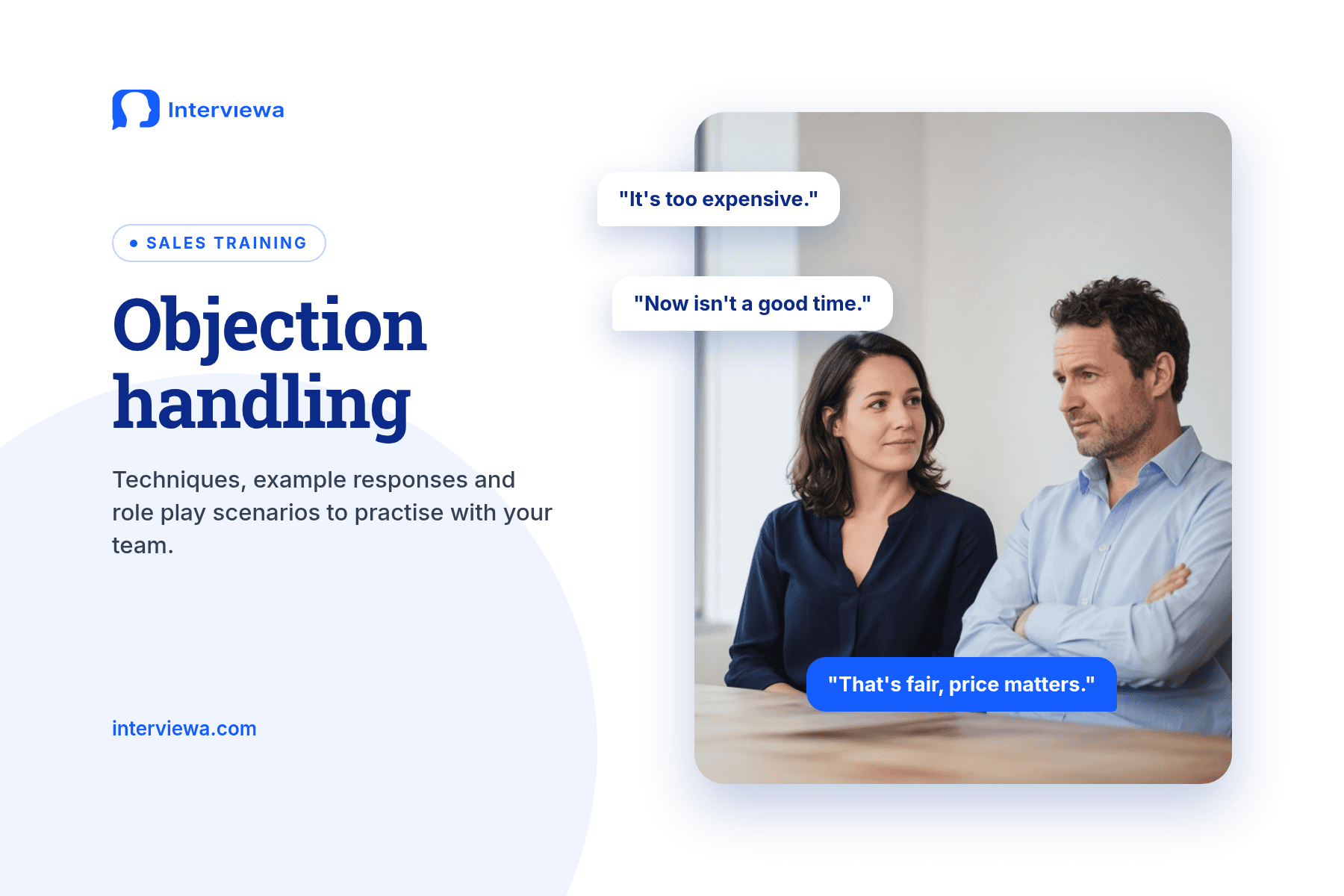
- Use objection handling questions. "Not interested" often means "not now" or "I don't see why". Our guide to objection handling has techniques and role-play scenarios.
- Practise out loud. Rehearse your opening and your answers to common objections. You can practise a sales pitch with Interviewa Training and get feedback before you pick up the phone.
- Keep calls short. If there is interest, book a discovery call rather than running a full demo on the spot.
- Sound natural, not robotic. Talk about benefits to the prospect, not a list of features.
- Keep voicemails short. Aim for under 30 seconds: your name, one reason and a number.
- Log everything. Record outcomes, notes and opt-outs after every call, and track a few simple measures, such as conversations held and meetings booked, to see what to improve.
How do you follow up after a cold call?
Send a follow up email within a day, while the conversation is fresh. Recap what they told you in their words, confirm the next step and attach nothing they did not ask for.
If the answer was "not now", agree a date to check back and stick to it. Deals often take more than one conversation, and prospects notice when you have listened. Move qualified prospects to the next stage of your sales process as soon as there is a clear need.
Where does an AI sales agent fit alongside cold calling?
An AI sales agent works best on the inbound side, picking up interest that cold calls and emails create. Prospects may visit your website after a call. If no one is available to answer their questions, that interest can fade.
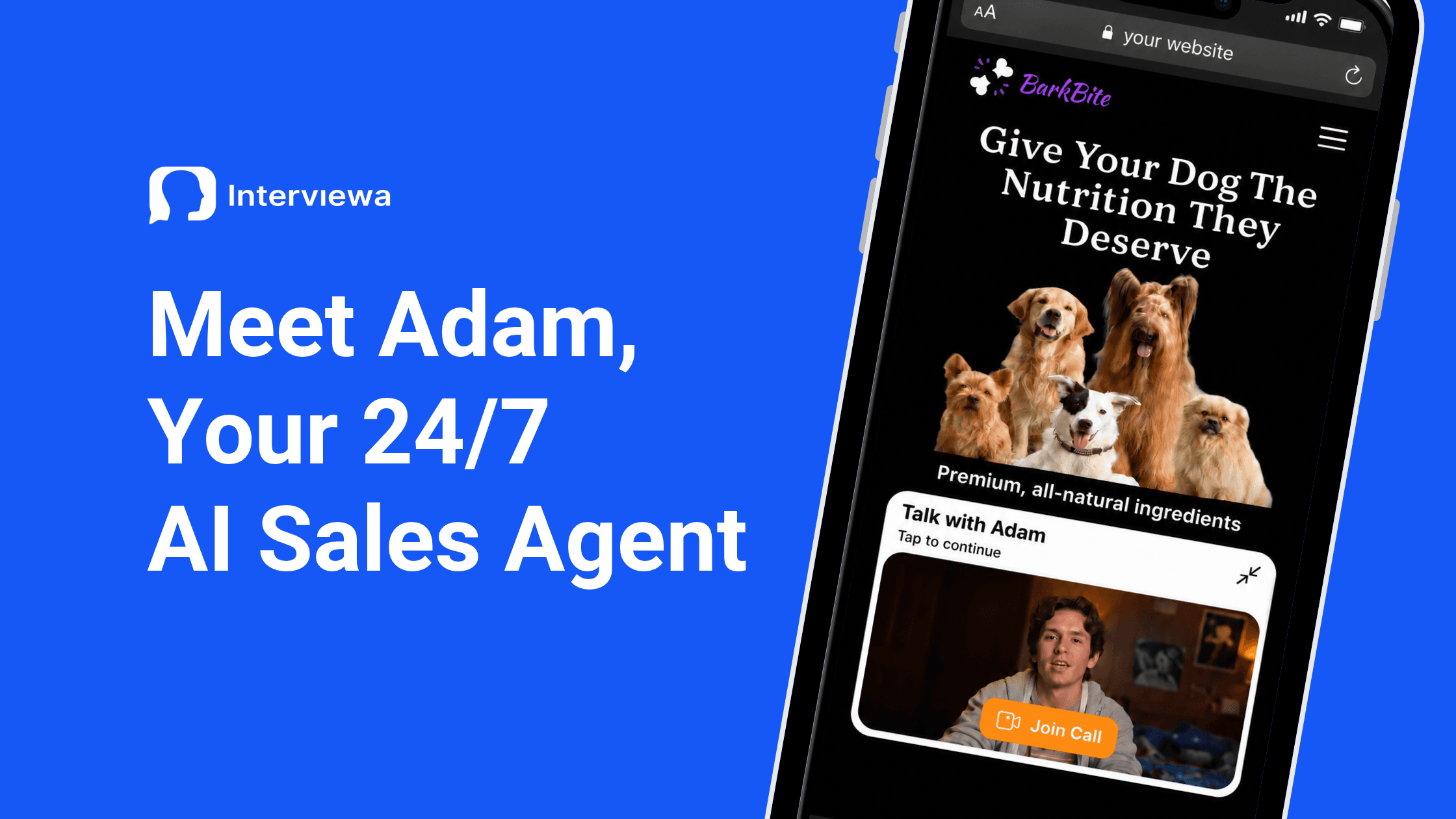
Interviewa Sales puts an AI agent on your website. Visitors can join a live video call, ask questions about what you do and see your brochure presented as slides, and your team gets a summary of every conversation. That means your sales reps walk into the next sales call with more context, already knowing what the prospect asked. Read more in Meet Adam, our AI sales agent, or see our guide to AI SDRs for how AI is changing the sales development role.
FAQ
Is cold calling still effective?
It can be, when it is well targeted at the right person. Calls with a specific reason and a clear, small ask still open doors, especially in B2B, where a short conversation can reach decision makers faster than email alone.
Is B2B cold calling illegal in the UK?
No. Live B2B cold calls are legal, but you must screen numbers against the TPS and CTPS, honour opt-outs, say who is calling and display your number.
What is the TPS?
The Telephone Preference Service is a free register where people can opt out of unsolicited live sales calls. The Corporate TPS does the same for companies. You can find out more at tpsonline.org.uk.
How do I practise cold calling?
Role-play with a colleague, record yourself, or use an AI practice tool to rehearse your opening line and objection responses until they sound natural.
What should I say at the start of a cold call?
Say your name and company, admit you are calling unannounced, and ask for a few seconds to explain why. Then give one specific, relevant reason for calling.
Get started free
Want every prospect who visits your site after a call to get answers straight away? Get started free with Interviewa Sales, or book a demo to see how an AI sales agent could support your team.