Recruitment process: the 8 stages, step by step, for UK employers
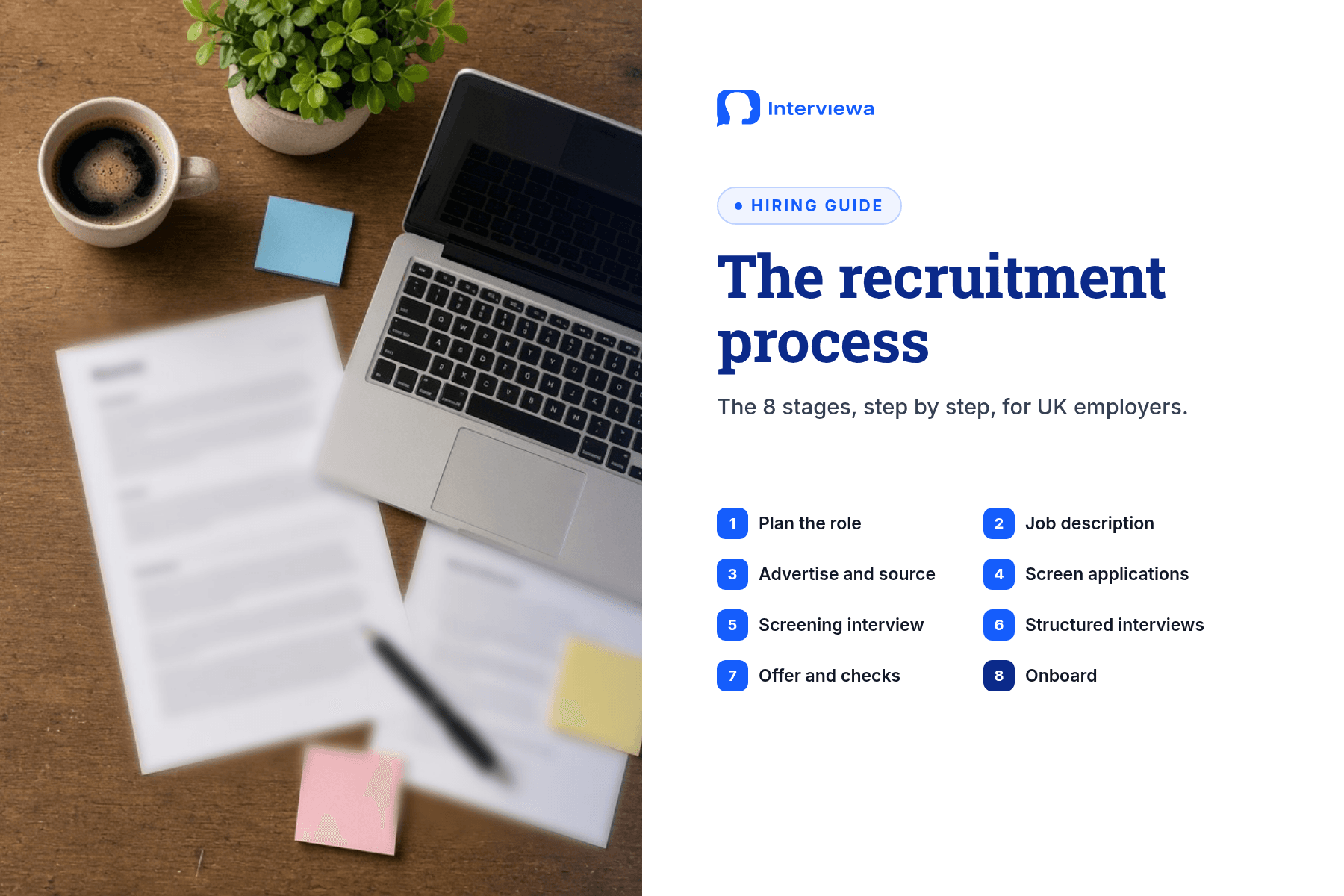
A recruitment process is the set of steps you follow to fill a job, from spotting the need to a new starter's first week. Most UK employers work through eight stages, and the ones that hire well keep each stage simple, written down and the same for every candidate.
That matters more than any tool. Acas notes that UK law does not set a required recruitment process, but employers must follow a fair one, and equality, data protection and right to work rules apply all the way through (Acas, How employers should recruit). This guide walks through each stage, what good looks like, and where time usually leaks out of the hiring process.
What are the stages of the recruitment process?
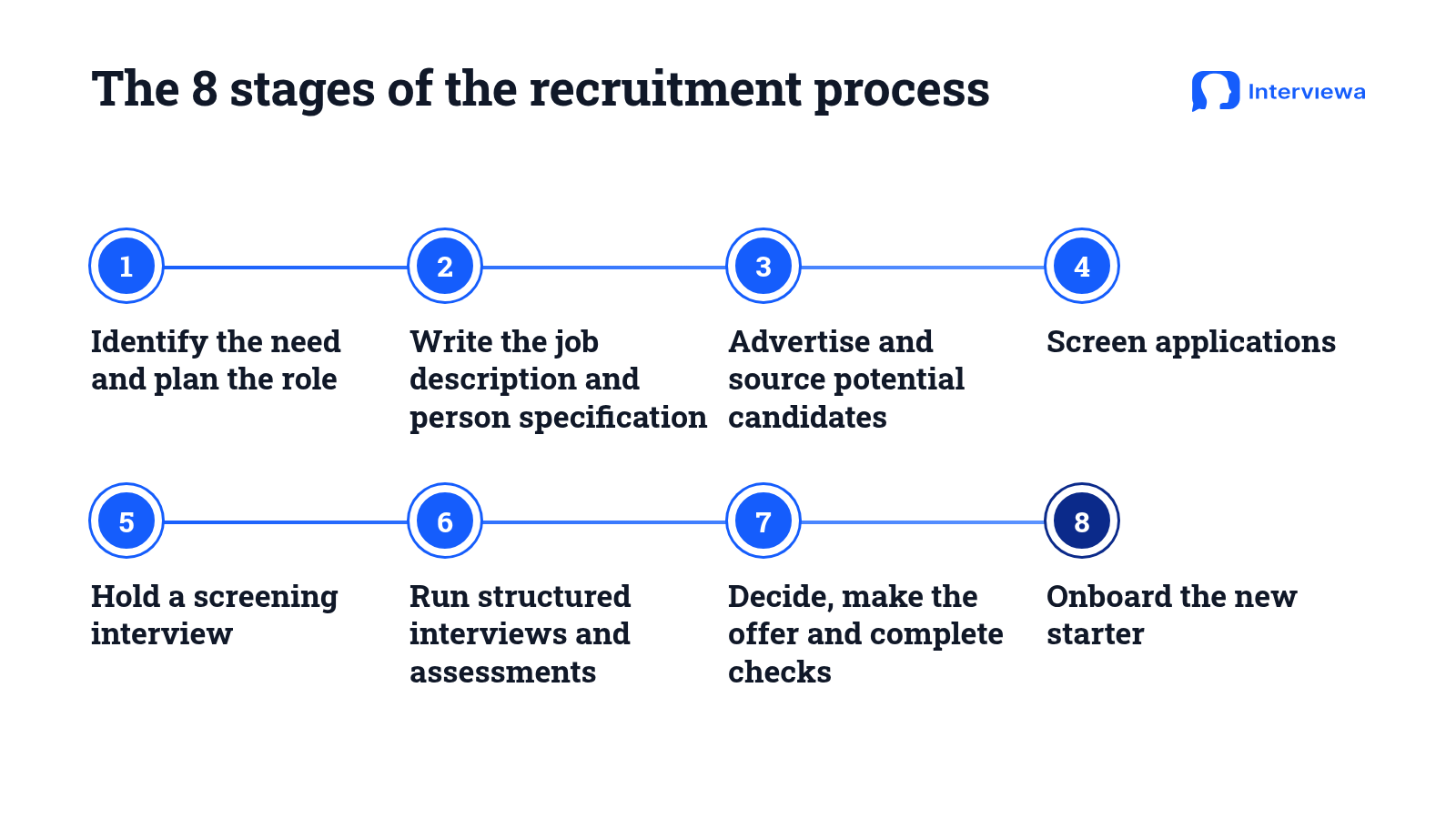
The short answer: plan the role, write the job description, attract applicants, screen, interview, decide, make the offer and run checks, then onboard. Some guides list five stages and others list seven or ten, but they cover the same ground.
Here is the version we find most useful for UK teams:
- Identify the need and plan the role
- Write the job description and person specification
- Advertise and source potential candidates
- Screen applications
- Hold a screening interview
- Run structured interviews and assessments
- Decide, make the offer and complete checks
- Onboard the new starter
The CIPD covers the same journey, from defining the role to making the appointment (CIPD, Recruitment factsheet). The order is easy. Doing each stage consistently is the hard part.
How do you plan a role before the hiring process starts?
Start by asking whether the position needs a new hire at all, then agree what the person must achieve in their first six to twelve months.
Before anyone writes an advert, hiring managers and HR should agree the budget, start date, sign-off, and the three to five things that separate a strong hire from an average one. Write these down. They become your criteria for every later stage of the entire recruitment process.
Block interview slots in diaries now, not after applications arrive. Slow interview scheduling is a common reason top talent drifts away.
What should a job description include?
A good job description says what the job is, what success looks like and what is essential versus nice to have, in plain words a candidate can scan in a minute.
Keep it to:
- a short summary of the role and team
- the main responsibilities, as outcomes rather than tasks
- essential skills and experience (keep this list short)
- nice-to-haves, clearly labelled as optional
- salary range, location, hours and working pattern
- how the hiring process works and roughly how long it takes
Long lists of "essential" requirements put off qualified candidates. Splitting must-haves from nice-to-haves widens your talent pool and gives you a clean structure for screening later.
Check the wording too. The Equality Act 2010 protects people from discrimination in recruitment on grounds such as age, disability, race, religion or belief, sex and sexual orientation (GOV.UK, Discrimination: your rights). Phrases like "young and energetic" or "native English speaker" can create real problems.
Where should you advertise a job?
Advertise where your best candidates already look, which is rarely just one place.
For most job openings, job boards bring volume. Your careers page and social channels reach people who already know your employer brand, and referrals often bring strong fits quickly. Track which sources lead to hires, so after a few roles you know where to spend effort.
How do you screen job applications fairly?
Screen every application against the same written criteria, in the same way, and record why each person moves forward or not.
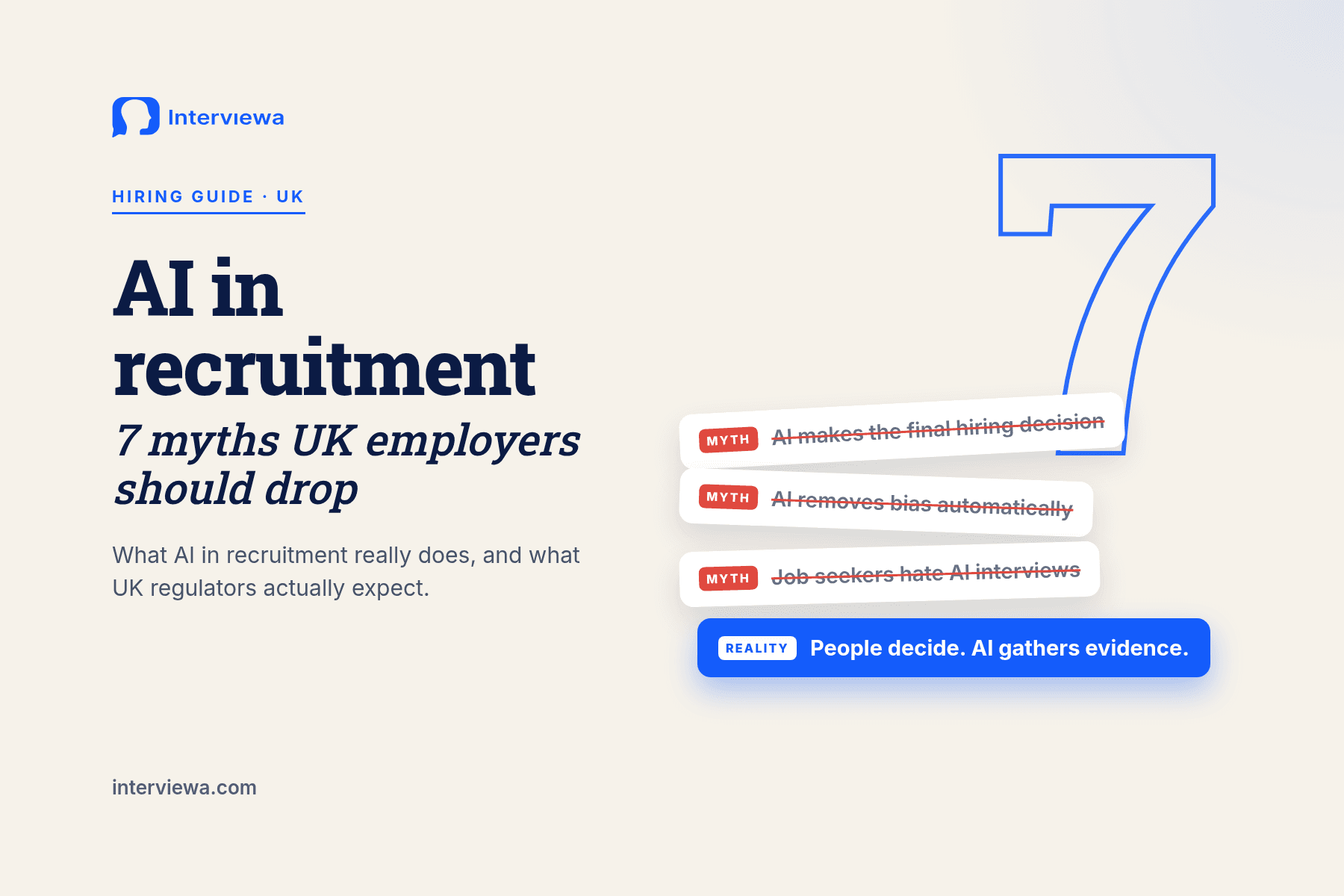
Recruitment automation software helps most here, and needs the most care. Applicant tracking systems and other recruitment software can collect applications, send updates and keep candidates engaged so nobody is left waiting for weeks. That removes manual data entry and repetitive tasks for recruiting teams. What it should not do is make hiring decisions on its own. Keep a human reviewing who progresses, and keep the reasons on file.
If you receive a large number of applications, a short screening interview is often fairer than reading CVs alone, because it gives every applicant a chance to show what they can do. We compare the options in our candidate screening software guide on the Interviewa insights page.
What is a screening interview?
A screening interview is a short first-round conversation that checks whether a candidate meets the essentials before you invest time in full interviews.
It usually covers motivation, the must-have skills, availability and salary expectations. Traditionally a recruiter does this by phone, which is hard to schedule at volume and varies from call to call.
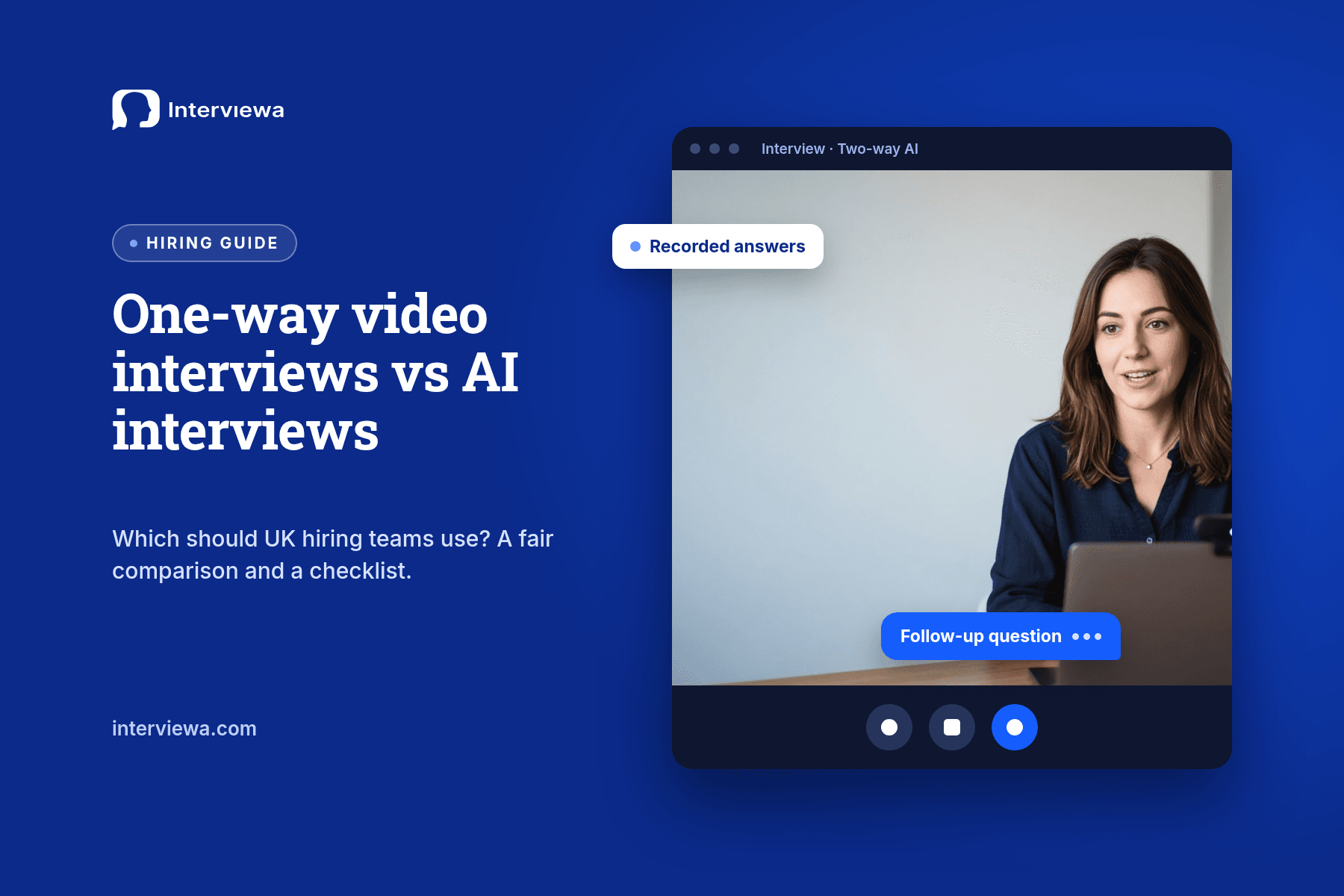
This is where AI first-round interviews can help. With Interviewa, you start from your job description, select the must-haves, nice-to-haves and cultural fits, and questions are generated from those, which you can edit. Eve, our default AI interviewer, then holds two-way video interviews with each candidate at a time that suits them, 24/7, asking follow-up questions that probe for what you are looking for. You get a summary of each candidate built around your criteria, and a human always makes the final decision. Read more on our hiring page, or see how this compares with recorded answers in one-way video interviews vs AI interviews.
Why use structured interviews?
Structured interviews ask every candidate the same core questions and judge answers against the same criteria, which makes decisions fairer and easier to explain.
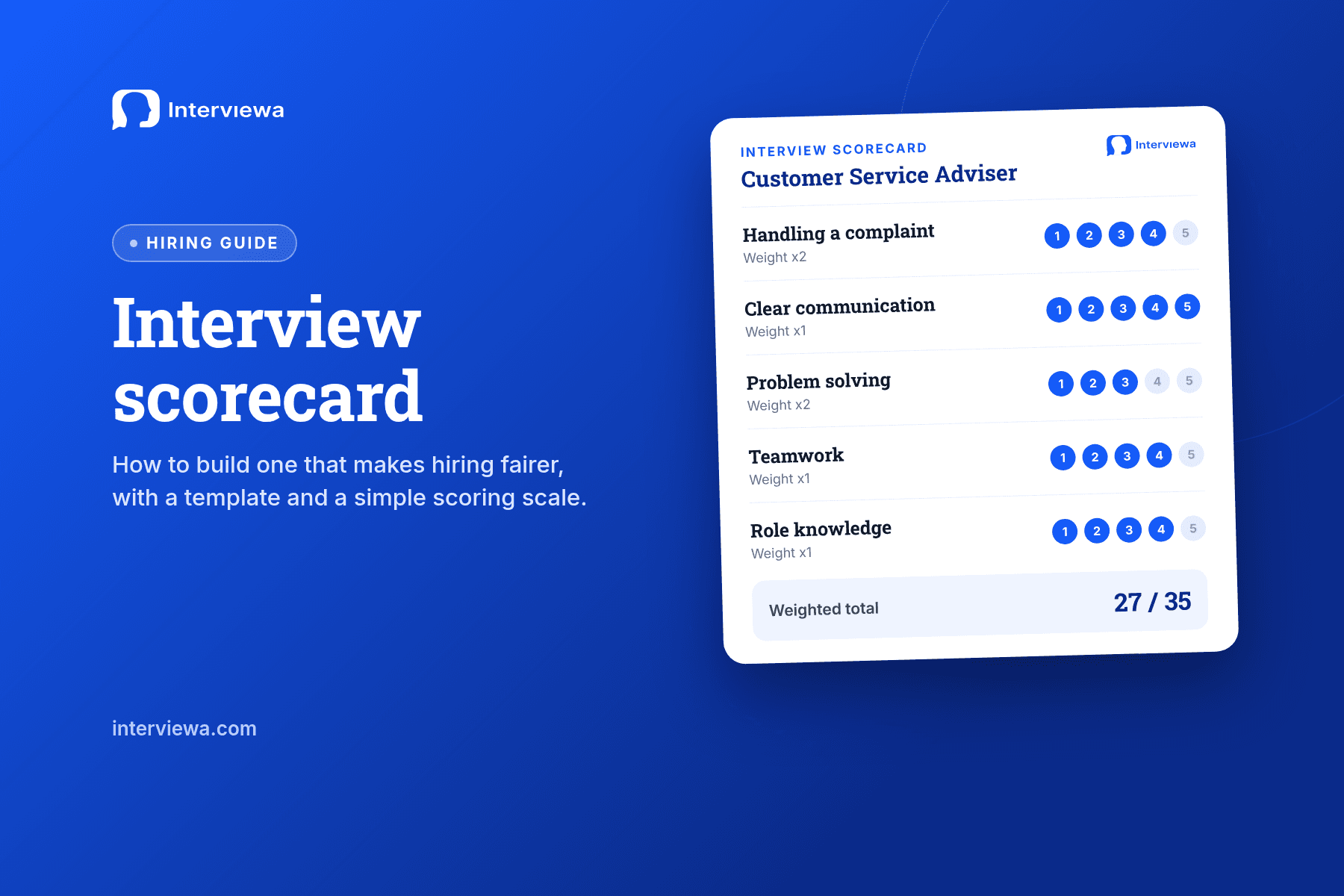
Unstructured chats drift and leave more room for gut feel and unconscious bias. Agree the questions in advance, link each to a criterion from your planning stage, and note the evidence each candidate gives. Our guide to building an interview scorecard shows how to set this up.
Add a short, relevant task where it helps, such as a written customer query for a support role, and never ask for unpaid work you would actually use.
How do you make a job offer and complete checks?
Make the offer quickly, by phone first and then in writing, and run the legal checks before the person starts work.
Strong candidates often have other options, so agree salary flexibility and sign-off before the final interview. Once the offer is accepted, complete references and any role-specific checks.
In the UK, employers must check that every new starter has the right to work before they begin, and can face a civil penalty if they employ someone who does not (GOV.UK, Check a job applicant's right to work). Build this into your process so it never becomes a last-minute scramble.
How do you measure time to hire and time to fill?
Time to hire is the number of days between a candidate entering your process and accepting your offer. Time to fill is wider: the days from opening the role to an accepted offer.
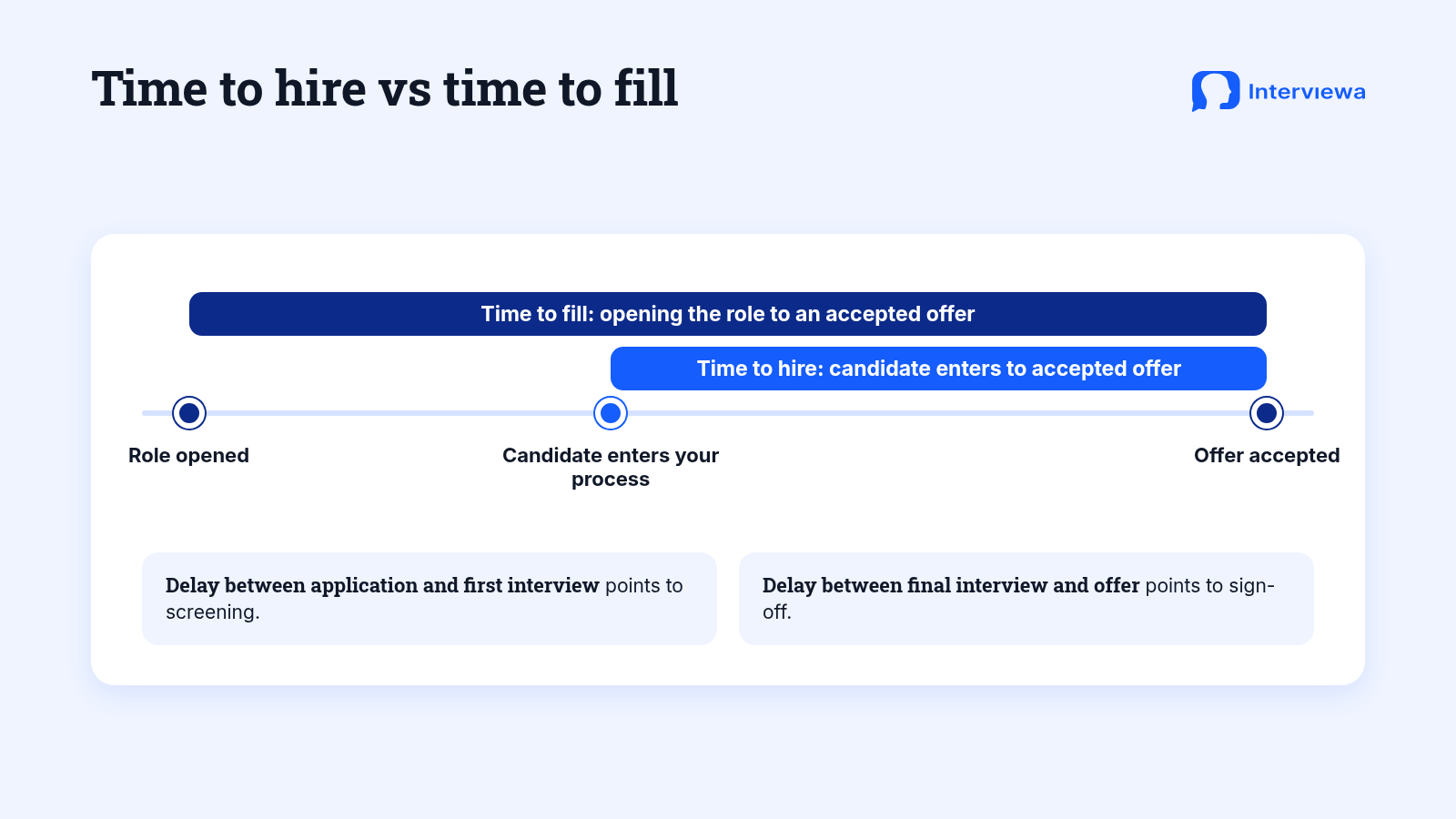
Tracking time to hire and time to fill for each role shows where your recruitment process stalls. Delay between application and first interview points to screening. Delay between final interview and offer points to sign-off.
As a real example, School of Coding used Interviewa for first-round interviews and went from 250 applications to 12 hires in 11 days instead of 30 or more, with an estimated 70% less admin. Your results will depend on the role and your team, but the lesson holds: most time is lost in the early stages, so that is where to look first.
What happens during onboarding?
Onboarding is the last stage of the recruitment process, and it decides whether your new hire stays.
Send practical details before day one, have equipment and logins ready, and give new employees a simple first-week plan, a named buddy and a feel for your company culture. Then ask new starters what the hiring process felt like. It is the cheapest candidate experience research you will ever get.
Frequently asked questions
What are the 7 steps of the recruitment process?
A common seven-step version is: identify the need, write the job description, advertise, screen applications, interview, offer and checks, then onboard. Our eight-stage version simply splits screening into application screening and a screening interview, because that is where most time is lost.
How long does the recruitment process usually take in the UK?
It varies widely by role, seniority and sector. Measure your own time to hire per role, then fix the stage where candidates wait longest.
Is there a legal recruitment process employers must follow in the UK?
No single process is required by law, but it must be fair. Equality law, data protection rules and right to work checks all apply, and Acas publishes practical guidance for employers.
What is the difference between recruitment and selection?
Recruitment attracts suitable applicants. Selection chooses between them. Most people use "recruitment process" to cover both.
Can artificial intelligence be used in the recruitment process?
Yes, particularly for screening and scheduling. Use it for consistent evidence and fewer repetitive tasks, keep a human making the final decision, and tell candidates how AI is used.
How can a small business improve its recruitment process?
Write down your must-haves before advertising, ask every candidate the same questions, block interview slots early and make offers quickly. These habits fix most problems without new software.
Get started free
A clear recruitment process is mostly good habits: agree what you need, ask everyone the same questions and move quickly. If first-round interviews are your bottleneck, try Interviewa and let Eve run consistent screening interviews around your criteria, any time of day. Get started free or book a demo.