One-way video interviews vs AI interviews: which should UK hiring teams use?
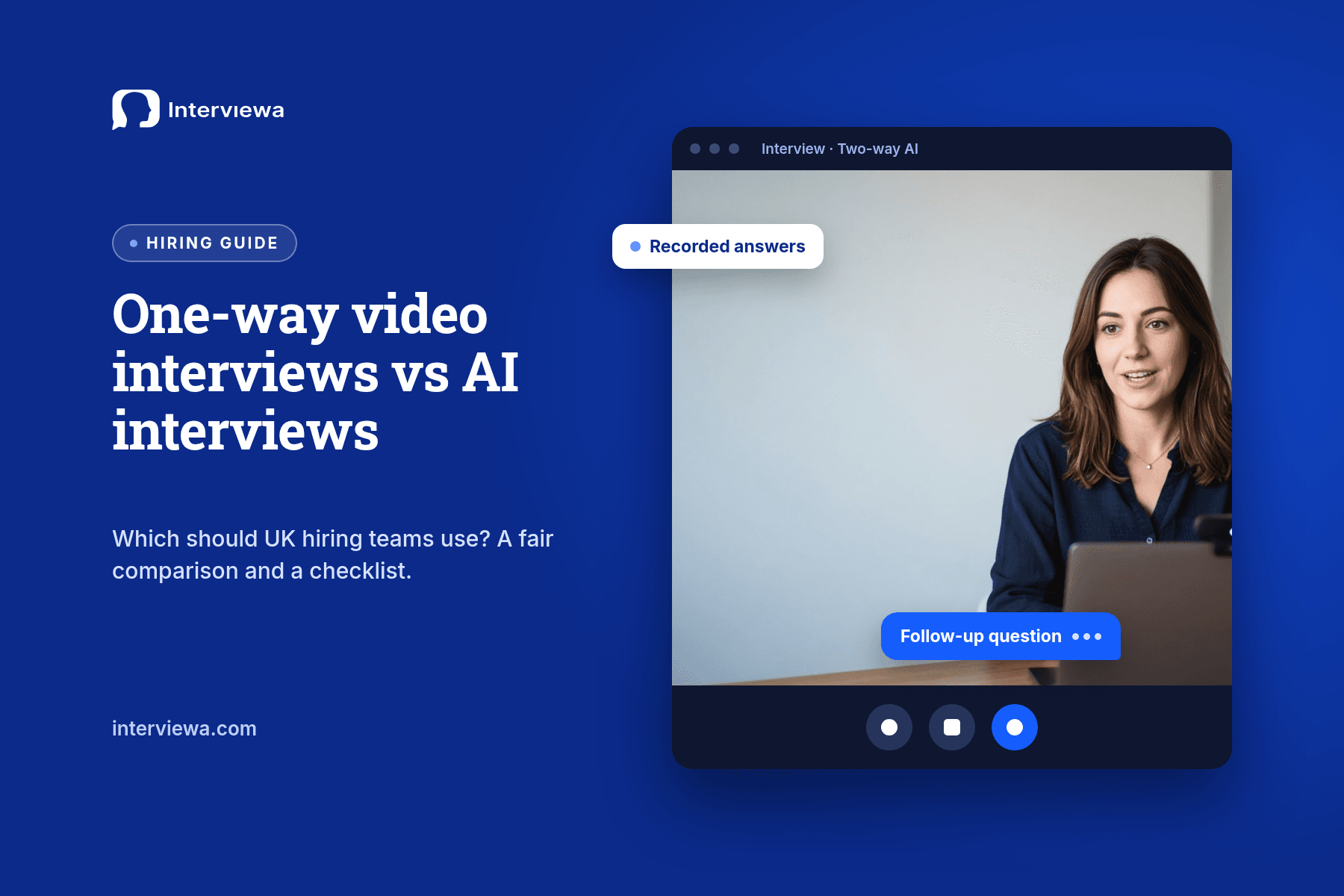
A one-way video interview is a recorded interview: candidates see set questions on screen and record their answers in their own time, and your team reviews the videos later. A two-way AI interview is a live, spoken conversation with an AI interviewer that can ask follow-up questions, so you get more context but need to think harder about fairness and transparency.
Both cut interview scheduling at the first screen of the hiring process. The right choice depends on your volume, the roles you hire for and how much time each hiring manager can spend reviewing by hand. This guide compares them fairly and gives you a checklist to decide.
What is a one-way video interview?
A one-way video interview is an asynchronous interview with no live interviewer, usually short interviews of a few questions sent after job applications are screened. Candidates get a unique link, read or watch each question, then record an answer within a time limit. Indeed's guide describes the same format from the candidate side.
Hiring teams use them to replace the first phone screen or early face to face interviews. Every candidate gets the same interview questions and time limit, and reviewers can watch the video responses when it suits them rather than booking dozens of calls. For small businesses with more applicants than time, that alone can shorten time to hire.
Well-known one-way video interview software includes:
- Hireflix, which describes itself as one-way video interview software and highlights no scheduling, shareable recorded interviews and ATS integration.
- Willo, which positions itself as candidate screening software with structured questions, transcripts and summaries, identity and right-to-work checks, and integrations with ATS tools such as Greenhouse, BambooHR and Lever.
- Spark Hire, which is now an applicant tracking system for small and medium organisations that includes one-way video interviews and AI scoring, and says its screening tools can be used on their own or with another ATS.
All three are established video interview tools. Check each interview platform's current features directly, as products change quickly.
How does a two-way AI interview differ?
A two-way AI interview is a live interview rather than a recording. The candidate speaks with an AI interviewer, which asks questions, listens to the answer and can follow up, much like a human first-round interviewer in virtual interviews on Microsoft Teams or Google Meet.
At Interviewa, Eve is our default AI interviewer. She runs structured video interviews through a two-way AI avatar, 24/7, and scores candidates consistently against your rubric. In Hiring, a human always makes the final decision: the AI interview gathers evidence, and your team decides who moves forward.
The main practical difference is depth. A one-way interview captures exactly what the candidate chose to say in answer to fixed prompts. A two-way interview can ask "What did you do next?" or "What was the result?" when an answer is vague, which often gives reviewers clearer evidence.
Which is better for candidates?
Neither format suits everyone, so the fairest approach is to explain the process clearly and offer alternatives on request. Candidate reactions vary. Some value the flexibility of recording in their own time; others find talking to a camera with no response awkward. Plan for both.
Things that help candidates in either format:
- Tell them what to expect. Number of questions, time per answer, whether they can retake, and who reviews the result.
- Let them practise first. A practice question removes a lot of nerves. Job seekers can also try an AI mock interview before the real thing.
- Offer reasonable adjustments. UK employers must make reasonable adjustments, and GOV.UK lists changing the recruitment process as one example. Extra time or a different format should be easy to request.
- Explain how AI is used. If any scoring or summarising is automated, say so plainly.
How can candidates prepare for a one-way video interview?
Treat it like a live interview, because it is one. Practise answering common interview questions out loud, use a structured approach to hit your key points with clear communication, and check your set-up before you start. Good interview preparation gives you a competitive edge with a new format.
- Read the job description and note the skills the employer wants.
- Use the STAR method for "tell me about a time" questions. Our guide to the STAR interview method explains how.
- Check your internet connection, camera and microphone first.
- Use proper lighting and a neutral background, dress appropriately, and look at the camera to maintain eye contact.
- Plan for a technical glitch. Check the invite for a support contact before you start.
- Do a practice session. Many tools offer a practice question, and an AI mock interview lets you rehearse with follow-up questions.
Which is better for hiring teams?
One-way video interview software suits teams that want a simple, low-change step and are happy to watch recordings themselves. Two-way AI interviews suit teams with high volumes who want consistent scoring and summaries so reviewers can focus on the strongest evidence first and reach top talent sooner. Either type of video interview software should let you set your own questions, including technical questions and behavioural questions for each job, so you assess the skills that matter.
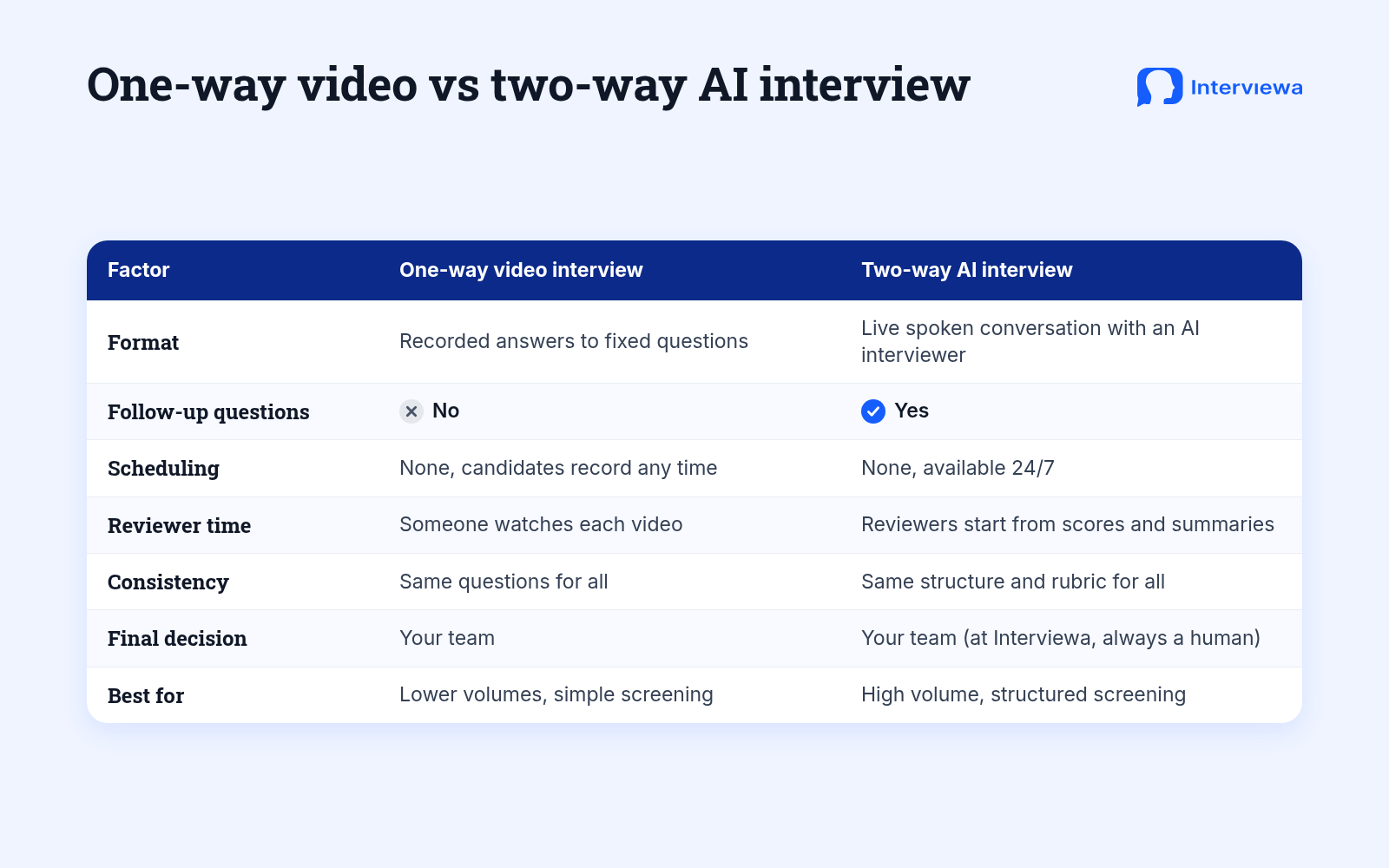
- Format. One-way video interview: Recorded answers to fixed questions. Two-way AI interview: Live spoken conversation with an AI interviewer.
- Follow-up questions. One-way video interview: No. Two-way AI interview: Yes.
- Scheduling. One-way video interview: None, candidates record any time. Two-way AI interview: None, available 24/7.
- Reviewer time. One-way video interview: Someone watches each video. Two-way AI interview: Reviewers start from scores and summaries.
- Consistency. One-way video interview: Same questions for all. Two-way AI interview: Same structure and rubric for all.
- Final decision. One-way video interview: Your team. Two-way AI interview: Your team (at Interviewa, always a human).
- Best for. One-way video interview: Lower volumes, simple screening. Two-way AI interview: High volume, structured screening.
As a real example, School of Coding used Interviewa to go from 250 applications to 12 hires in 11 days instead of 30 or more, with an estimated 70% less admin. Results depend on your process, so run your own trial before committing.
What should UK employers check before using either?
Check data protection, fairness and fit with your existing systems before you add another video platform to your interview process. Multiple tools that do not talk to each other slow down the entire hiring process. The Information Commissioner's Office audited several AI recruitment tool providers and, in its November 2024 announcement, said it made almost 300 recommendations. These included processing personal information fairly, keeping it to a minimum and clearly explaining to candidates how the AI tool uses their information. The ICO also published key questions for organisations buying AI recruitment tools.
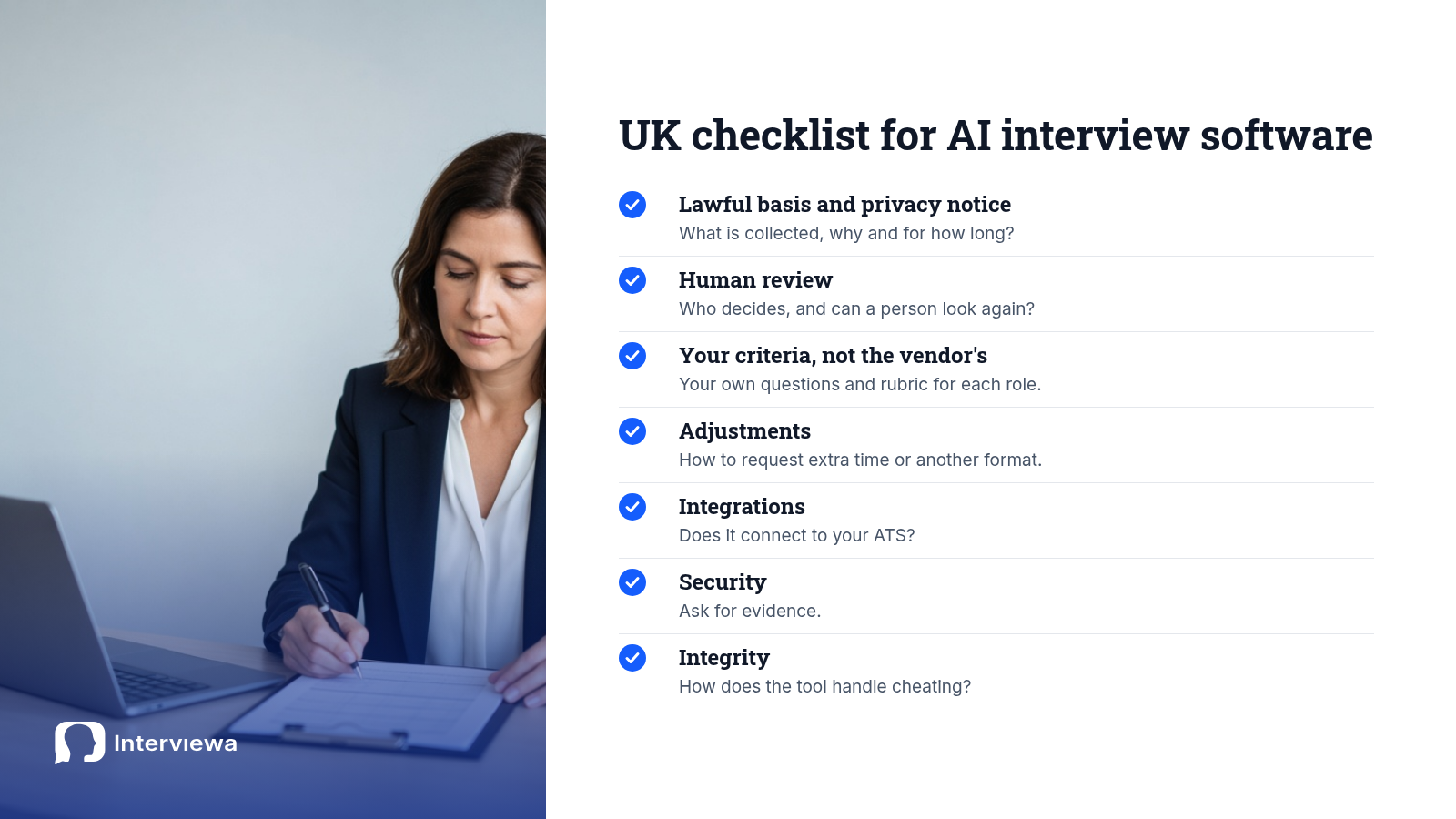
A practical checklist:
- Lawful basis and privacy notice. Can you explain in plain English what is collected, why and for how long?
- Human review. Who makes the decision, and can a candidate ask for a person to look at their application?
- Your criteria, not the vendor's. Can you set your own questions and rubric for each role?
- Adjustments. How does a candidate request extra time or another format?
- Integrations. Does it connect to your ATS? Interviewa, for example, integrates with Workable.
- Security. Ask for evidence. Interviewa is GDPR compliant and Cyber Essentials certified, and is working towards ISO 27001.
- Integrity. How does the tool handle cheating? Interviewa includes anti-cheat measures.
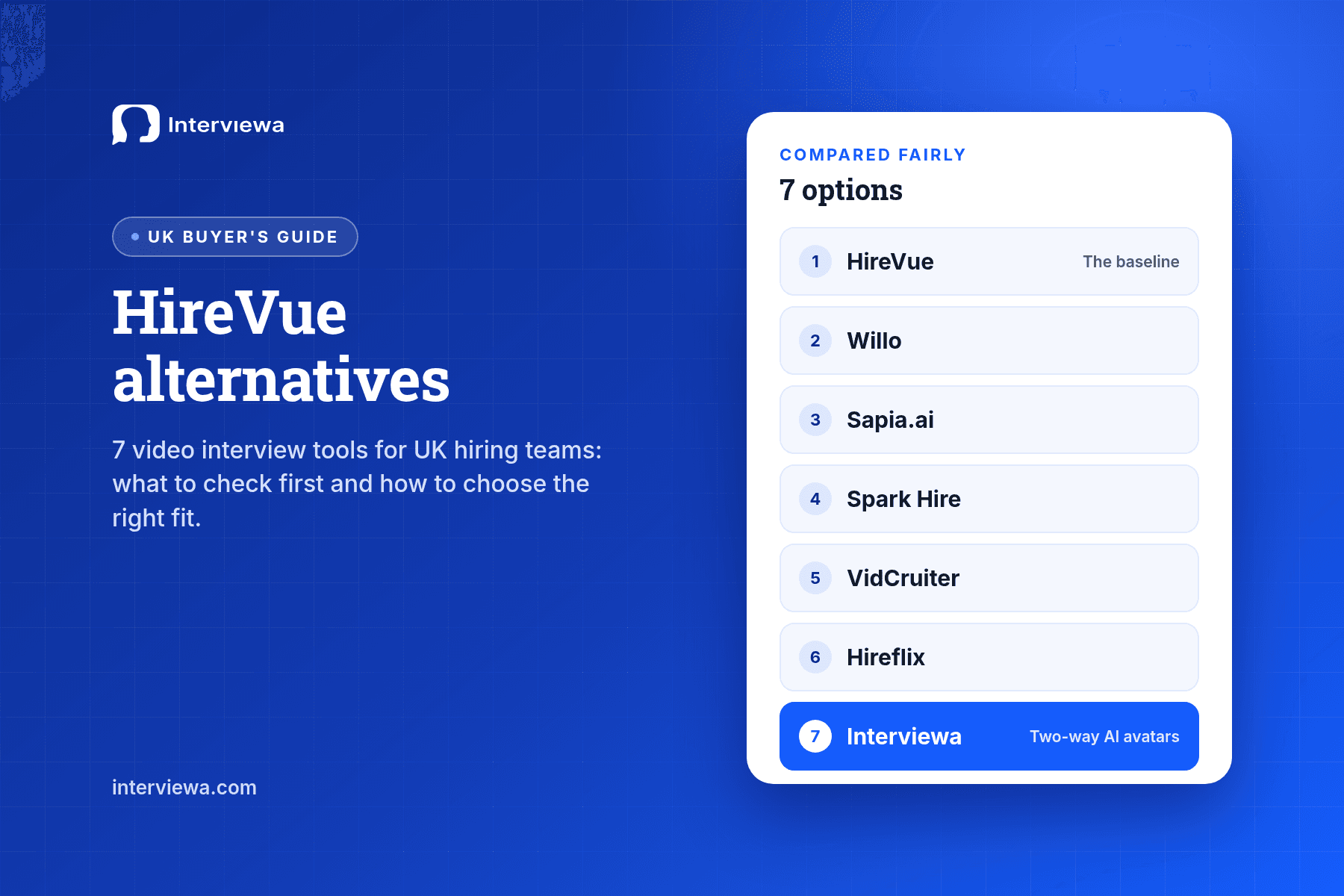
For a broader view of tools, see our guide to HireVue alternatives for UK hiring teams and our checklist on choosing candidate screening software.
How do you run a fair trial of either format?
Run a short, side-by-side trial on one live role. Keep the questions and scoring criteria the same so you compare the format, not the content.
- Pick a role with enough applicants to compare.
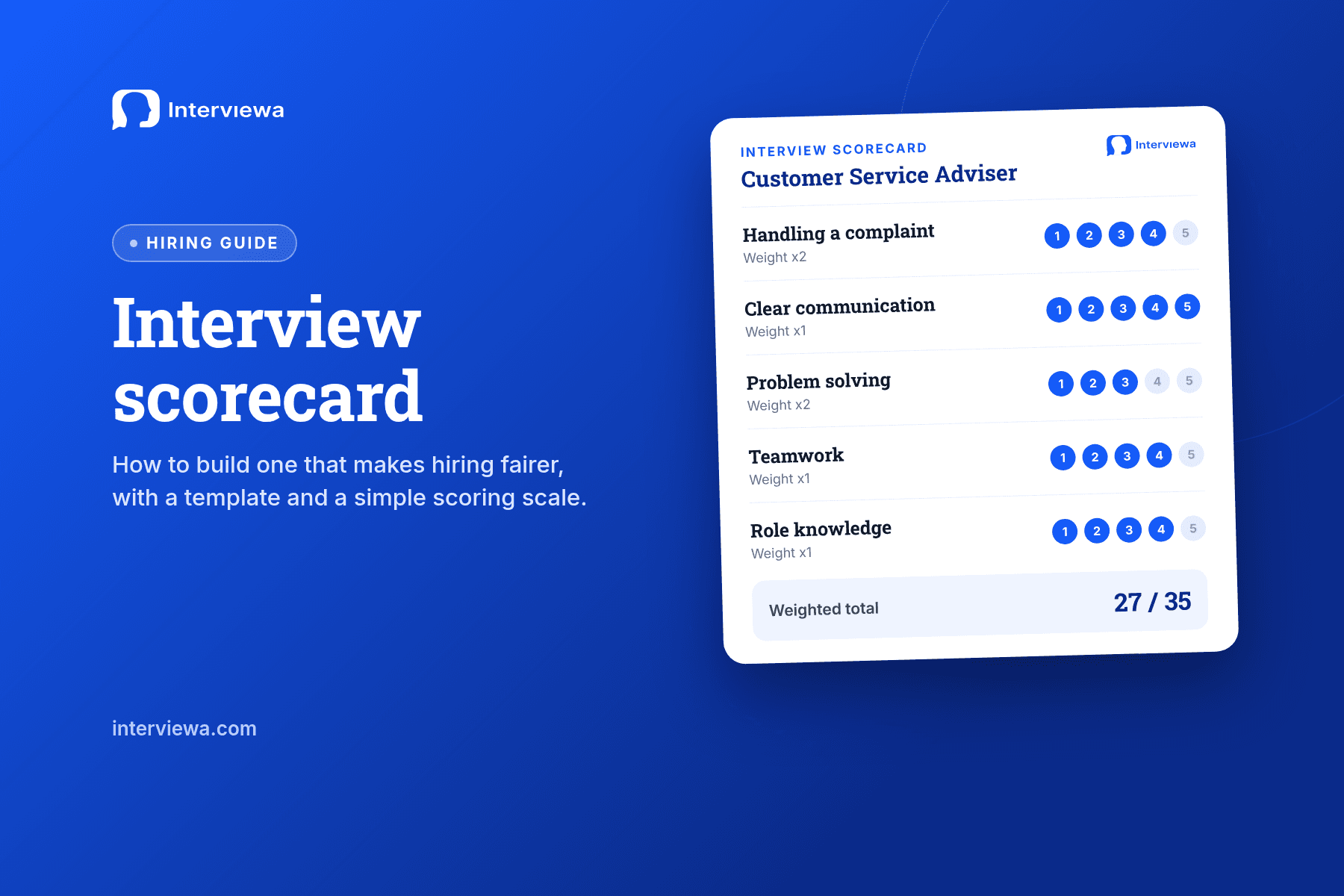
- Write four to six structured questions and a simple rubric.
- Send half of shortlisted candidates through each format.
- Ask reviewers to record time spent and confidence in their decisions.
- Ask candidates two questions afterwards: was it clear, and did it feel fair?
- Compare the shortlists, then decide.
One-way video interview FAQ
Is a one-way video interview the same as an asynchronous video interview? Yes. Both terms describe recorded interviews where candidates answer set questions in their own time with no live interviewer.
Can candidates retake answers in a one-way interview? It depends on the tool and on your settings. Many tools let employers choose whether to allow retakes. Tell candidates in advance.
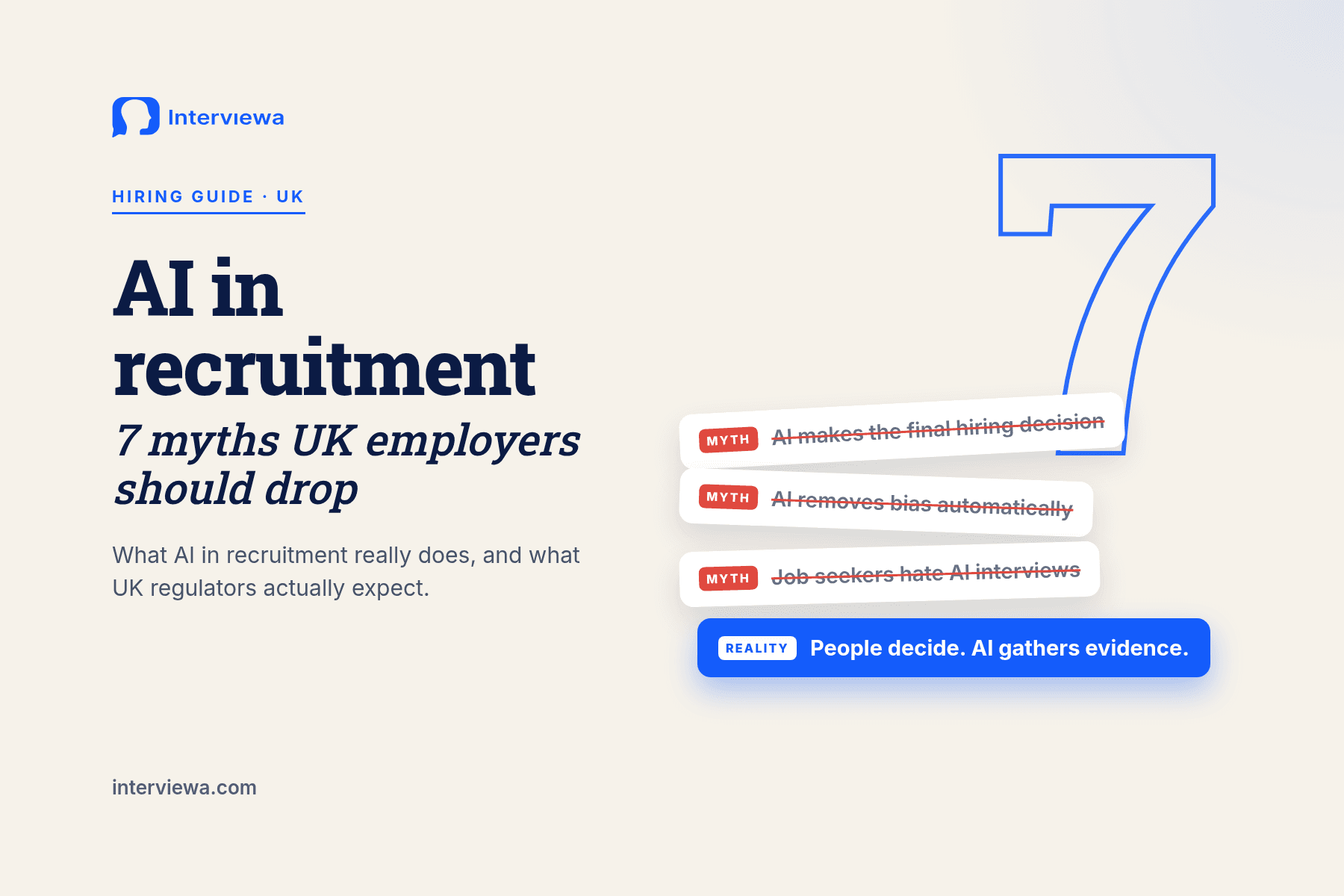
Does an AI interview make the hiring decision? It should not make the final call on its own. At Interviewa, a human always makes the final decision in Hiring.
Are AI interviews legal in the UK? AI can be used in recruitment, but data protection and equality law still apply. Follow ICO guidance, be transparent with candidates and offer reasonable adjustments.
Which is quicker for reviewers? One-way interviews remove scheduling but still need someone to watch each video. Two-way AI interviews with scores and summaries can cut review time further, though you should still check the evidence behind each score.
Get started free
Want to see how a two-way AI interview feels from the candidate side? Get started free and try an interview with Eve, or read more about Interviewa for hiring teams.