AI in recruitment: 7 myths UK employers should drop
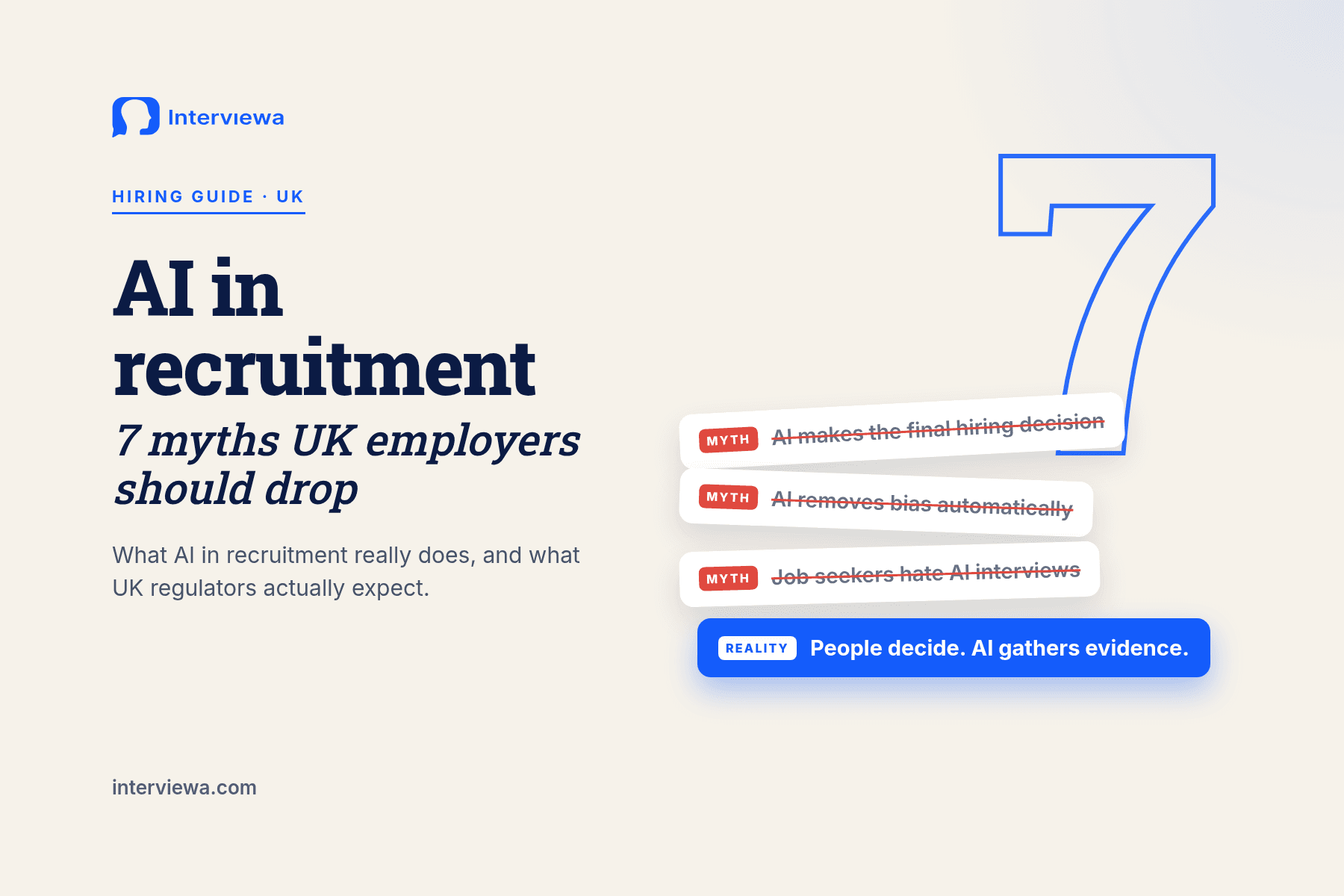
AI in recruitment means using software to help with tasks such as sourcing, screening, interviewing and scheduling, so recruiting teams and hiring managers spend less time on administrative work and more time on strategic work with people. It does not have to mean a robot choosing who gets the job, and in the UK it comes with clear expectations on fairness, transparency and human involvement.
There is a lot of noise about AI recruiting. This guide sets seven common myths against what UK regulators have actually said.
What does AI in recruitment actually do?
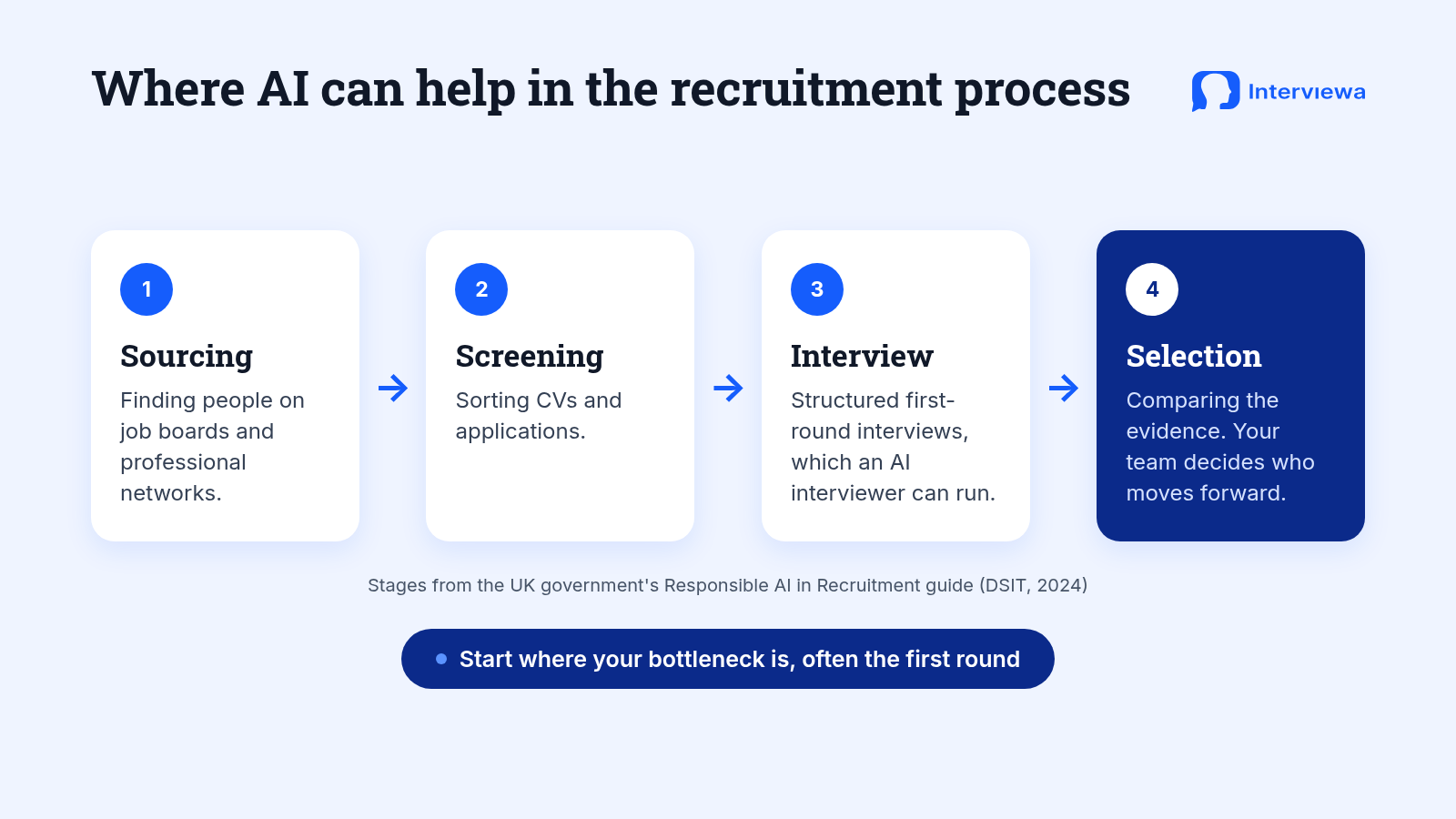
In short, it takes on repetitive, high-volume steps in the recruitment process. Typical uses include candidate sourcing on job boards and professional networks, resume screening, first-round interviews run by an AI interviewer, interview scheduling and summarising what candidates said.
The UK government's Responsible AI in Recruitment guide, published by the Department for Science, Innovation and Technology in March 2024, groups these tools by stage: sourcing, screening, interview and selection. Most employers do not need AI everywhere. They need it at the stage where the bottleneck is, which for many UK hiring teams is the first round, when hundreds of applications land for one role.
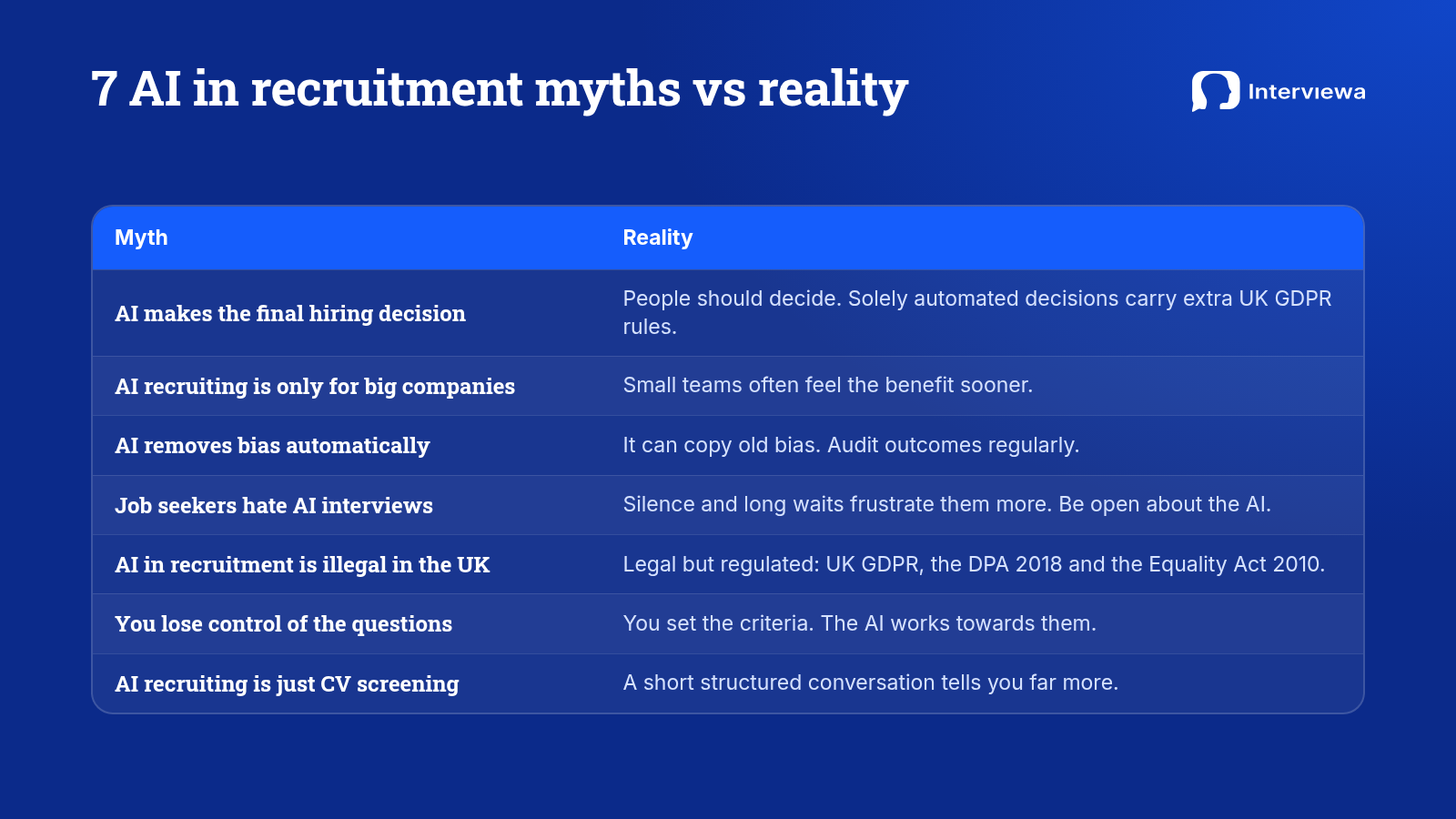
Myth 1: Does AI in recruitment make the final hiring decisions?
No, and it should not. A well-designed hiring process uses AI recruiting software to gather and organise evidence, while human recruiters keep oversight of every decision.
The Information Commissioner's Office (ICO) says that decisions made solely by automated means, with legal or similarly significant effects on people, fall under specific rules in UK GDPR. In its Recruitment rewired report, based on evidence from over 30 employers between March 2025 and January 2026, the ICO's key finding was that many employers are likely relying on solely automated decisions and need more safeguards than they currently have.
At Interviewa, a person always makes the final hiring decision. The AI interviewer runs the conversation and gives your team a scorecard and summary against your criteria. Your team decides who moves forward.
Myth 2: Is AI recruiting only for big companies?
No. Small teams often feel the benefit sooner, because they have no spare recruiters to absorb a spike in applications.
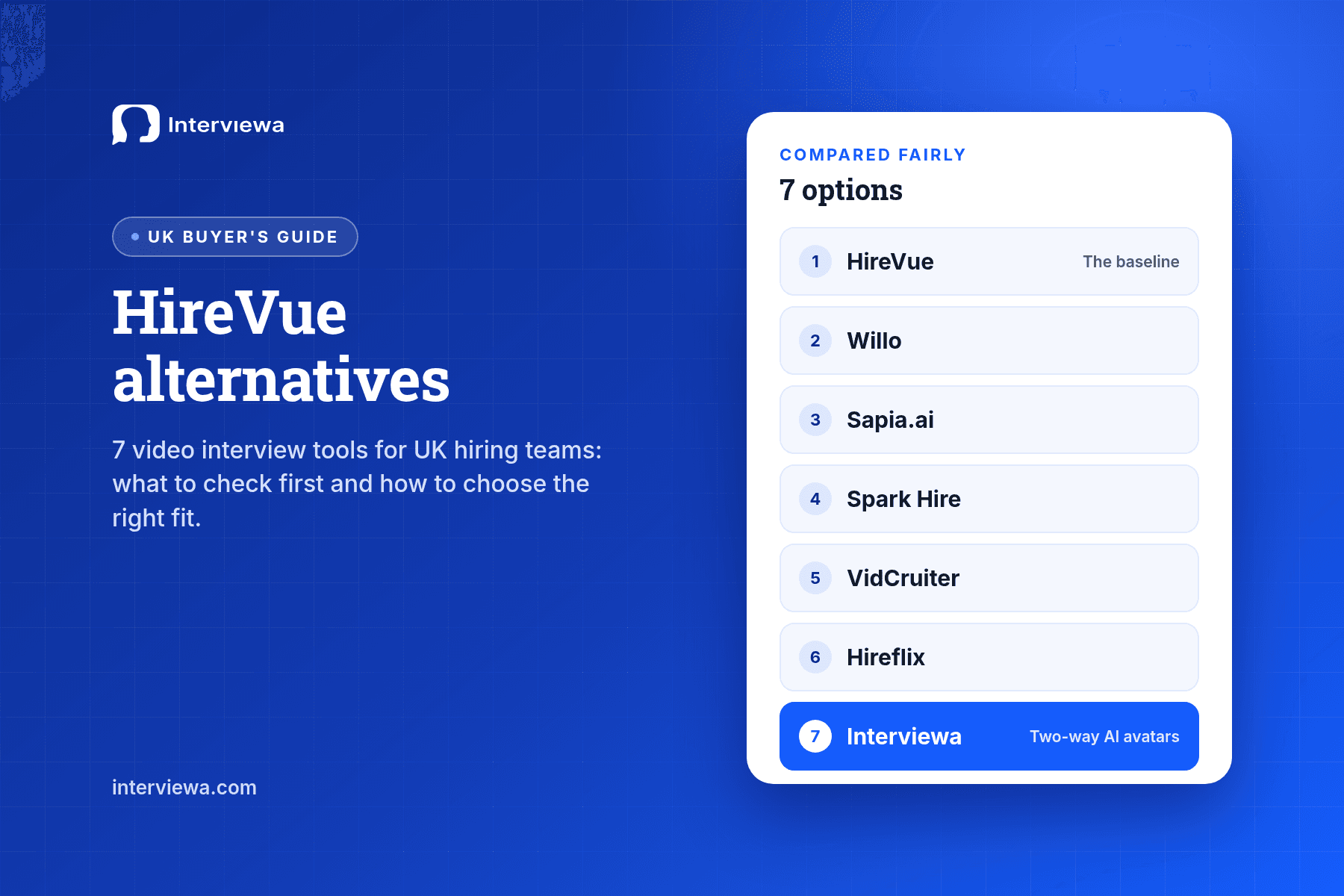
A small business hiring for one role can still receive more applications than anyone has time to read properly. AI powered tools that run structured first-round interviews around the clock let a two-person team speak to every applicant, not just the first 20 CVs someone had time to open. If you are comparing options, our guide to candidate screening software lists the questions to ask before you choose.
Myth 3: Will AI recruiting remove unconscious bias automatically?
No. AI systems can make a process more consistent, but they can also copy old biases if nobody checks it.
The ICO's audit of AI recruitment tool providers, published in November 2024, found good practice alongside real problems. Some tools let recruiters filter out candidates with certain protected characteristics. Others guessed people's gender or ethnicity from their name instead of asking them. The ICO made almost 300 recommendations, all of which were accepted.
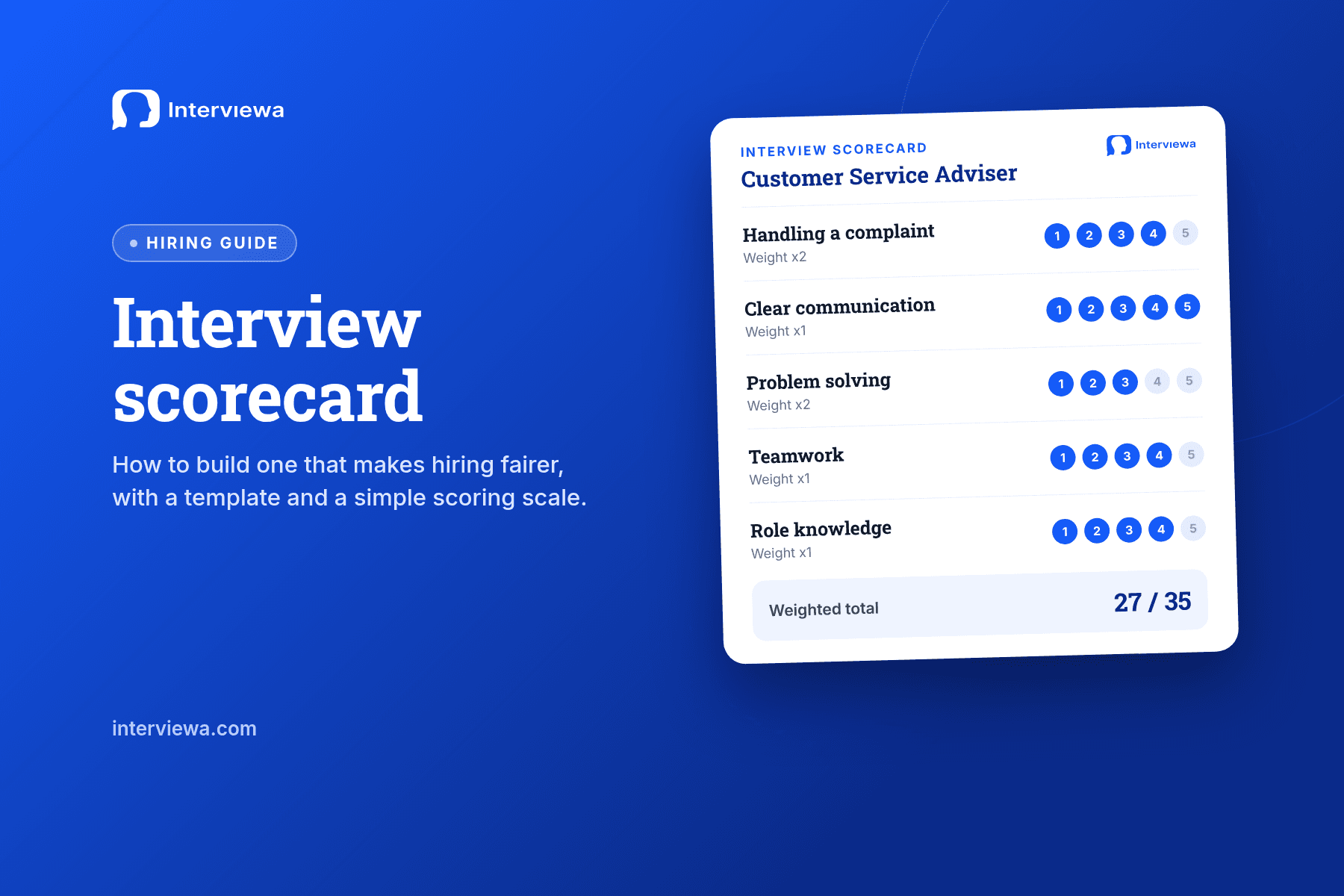
The lesson is simple. Consistency helps fairness, but only when you also run regular audits of outcomes. Ask any supplier about bias detection: how they test, whether their models learn from historical hiring data, and how you can review results by group. Structured questions help too. Our post on the interview scorecard explains why asking every candidate the same core questions makes comparisons fairer.
Myth 4: Do job seekers hate AI interviews?
Not necessarily. What candidates often dislike is silence in the hiring process, long waits and processes that feel unfair. A good AI interview can fix the first two and help with the third.
The ICO's public perceptions research, summarised in Recruitment rewired, found people were generally comfortable with automation for tasks like filtering CVs, but more wary of profiling-based tools such as online behavioural assessments. The rule is simple: be open about what the AI does and keep it focused on the job.
A better candidate experience in AI hiring usually comes from three things:
- Telling candidates up front that an AI interviewer will run the first round, and why.
- Letting them take the interview when it suits them, including evenings and weekends.
- Making sure a real person reviews their interview and gets back to them.
Myth 5: Is AI in recruitment illegal under UK law?
No. It is legal, but it is regulated. You need to meet UK GDPR, the Data Protection Act 2018 and the Equality Act 2010, just as you would with any other hiring method.
In practice that means a lawful basis for processing, clear privacy information for candidates, a data protection impact assessment for higher-risk uses, and reasonable adjustments for disabled applicants. The ICO's guidance and the government's Responsible AI in Recruitment guide both give checklists you can work through with your supplier.
Interviewa is GDPR compliant and Cyber Essentials certified. Ask any supplier how they store and secure candidate data before you sign.
Myth 6: Does using AI mean losing control of the questions?
No. With the right tool, you set what good looks like and the AI works towards it.
Here is how it works in Interviewa Hiring. You start with the job and the skills you are looking for, then set your must-haves, nice-to-haves and cultural fits. Interview questions are built from those choices, and you can review and change them before the interview goes live. During the interview, the AI asks follow-up questions to dig into what you are looking for, and candidate scorecards and summaries are built around the same criteria.
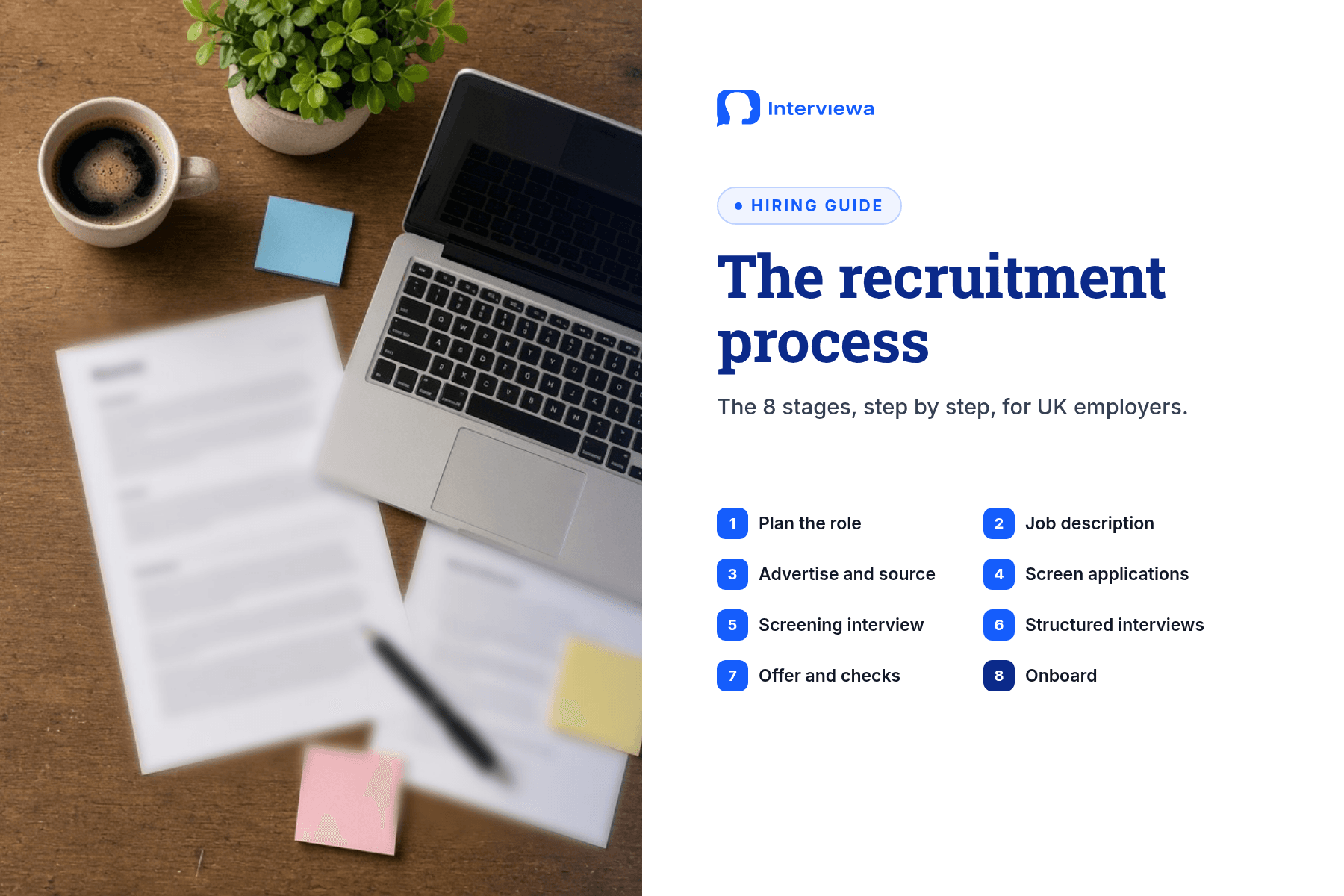
That keeps the hiring manager in charge of the brief. If you are mapping a full process, our guide to the recruitment process shows where a first-round AI interview usually sits.
Myth 7: Is AI recruiting just resume screening?
No. Parsing resumes is one use, but it is not the most useful one. Software can misread unconventional CVs and miss real skills, and many CVs are now polished by AI tools anyway.
A short, structured conversation tells you far more. You hear how someone explains their experience, handles a follow-up question and thinks through a problem. That is why many teams are moving the first real test from the CV to the interview. Interviewa also includes anti-cheat checks, designed to give you more confidence that answers come from the candidate.
What results can AI in recruitment deliver?
It depends on where your bottleneck is, but speed and admin are where most teams see change first.
One example: School of Coding went from 250 applications to 12 hires in 11 days, instead of the more than 30 days it used to take, with an estimated 70% less admin. Your numbers will differ. Track time to hire, hours spent per hire, candidate drop-off and the quality of people who reach final interview, before and after.
How do you start using AI in recruitment safely?
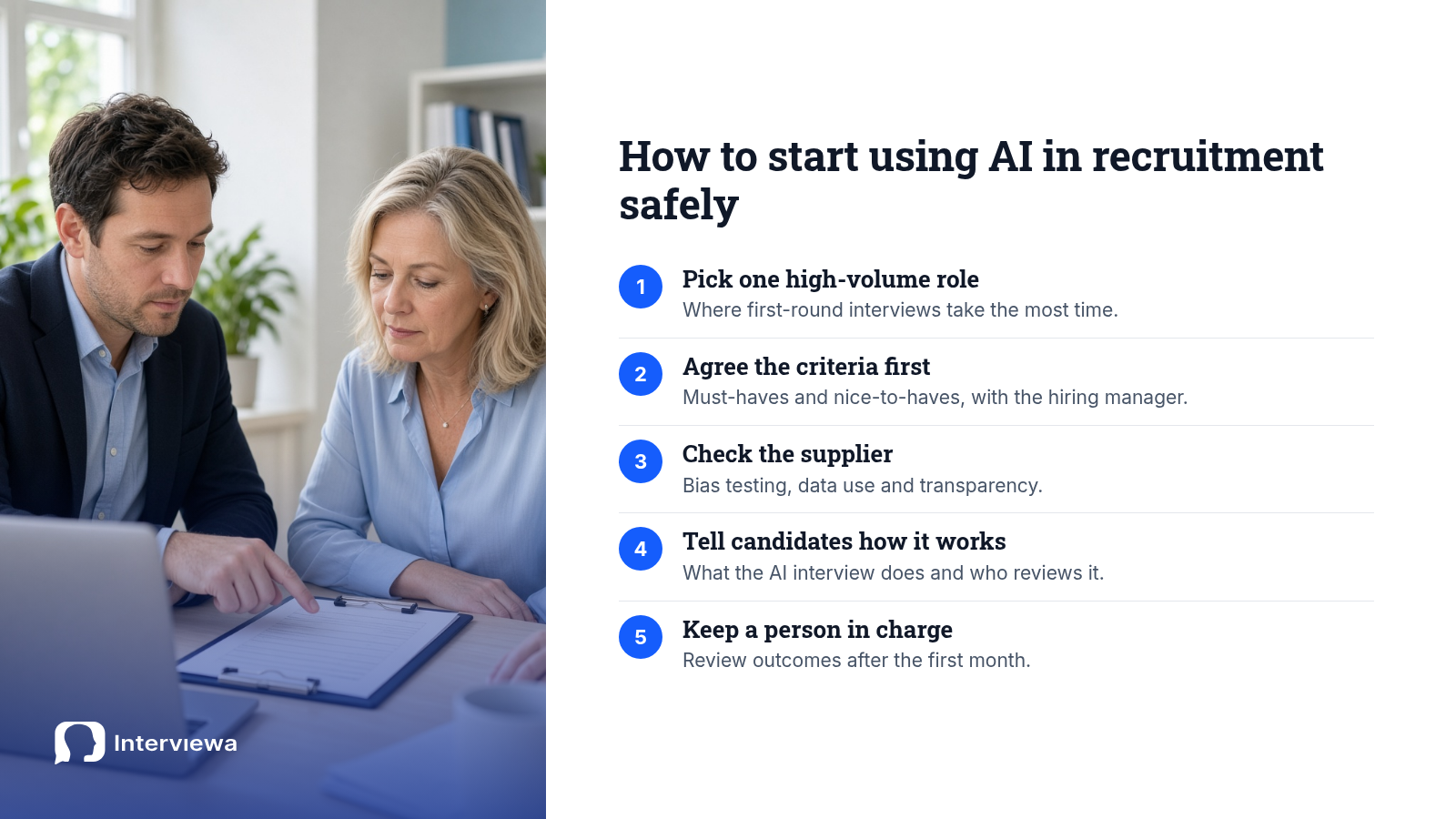
Start small, with one role and one stage, and measure it. A simple plan:
- Pick one high volume hiring role where first-round interviews eat the most time.
- Agree the job requirements, must-haves and nice-to-haves with the hiring manager before anything goes live.
- Check the supplier against the ICO's questions on bias testing, data use and transparency.
- Tell candidates clearly how the AI interview works and who reviews it.
- Keep a person in charge of every decision, and review outcomes after the first month.
If you already use Workable, see how Interviewa works with Workable to run first-round interviews without changing your applicant tracking system.
FAQ
What is AI in recruitment?
It is the use of artificial intelligence, including machine learning and conversational AI, to help with hiring tasks such as sourcing, screening, interviewing and scheduling. People still set the criteria and make decisions.
Is AI recruitment legal in the UK?
Yes. It must follow UK GDPR, the Data Protection Act 2018 and the Equality Act 2010. Solely automated decisions with significant effects on candidates carry extra rules, so keep meaningful human involvement.
Can AI make hiring fairer?
It can, by asking every candidate the same core questions and judging answers against the same criteria. It only stays fair if you monitor outcomes and check for bias regularly.
What is an AI interviewer?
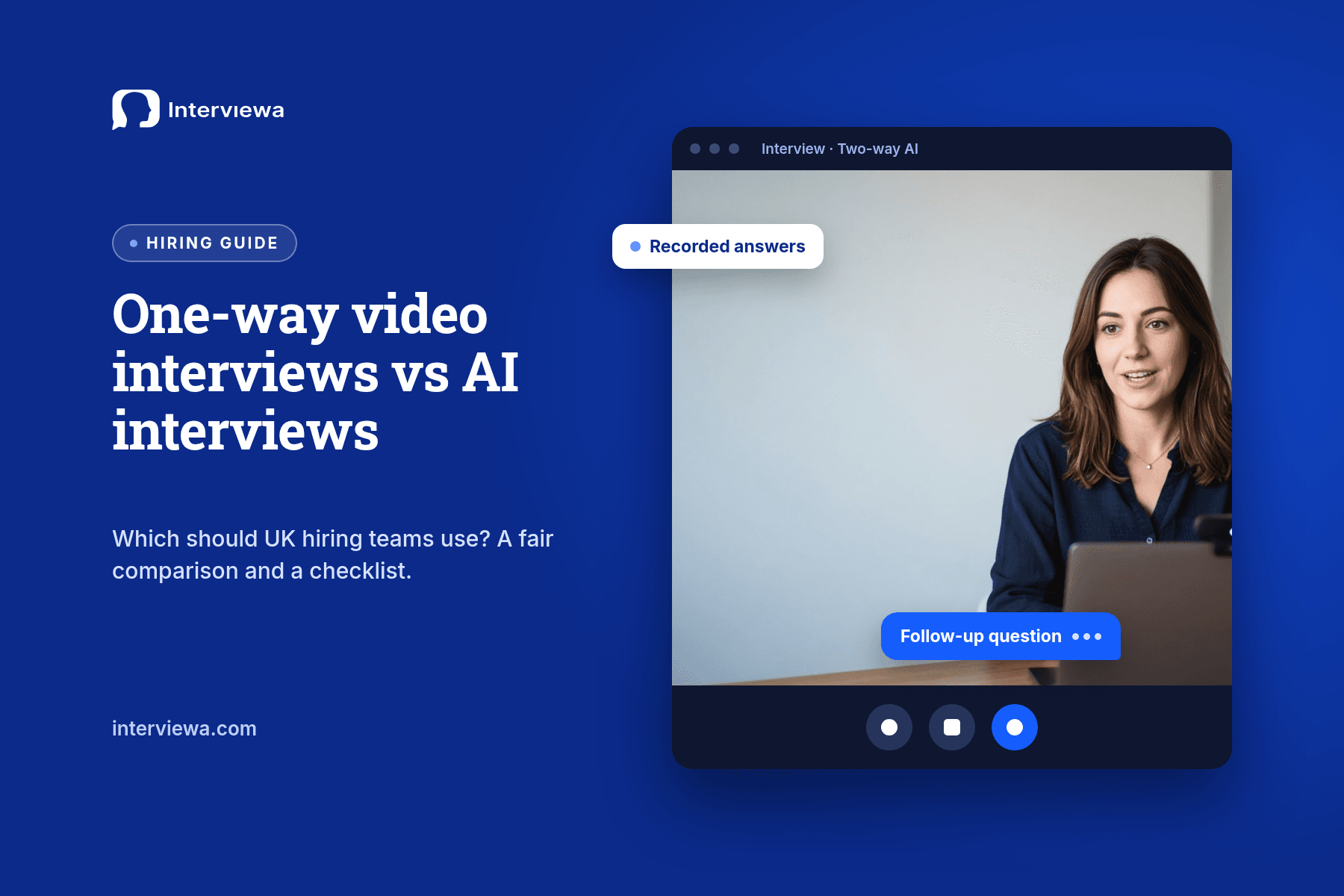
An AI interviewer is a conversational agent that runs a structured interview with a candidate, asks follow-up questions and summarises the answers for the hiring team. At Interviewa, our AI interviewers, such as Eve, run these conversations as two-way video interviews.
Will AI replace recruiters?
No. AI recruiting removes repetitive tasks so recruiters can spend more time on judgement, relationships and closing offers. The future is AI tools and human recruiters working together.
How long does it take to set up?
For a single role, setup can be quick. Interviewa advertises a one-minute setup and five free interviews, with no credit card required, so you can try it on one role first.
Get started free
Want to see what a structured AI interview feels like before you change anything? Get started free and try a live AI interview for one of your roles, or book a demo to talk it through with our team.