Coaching skills: a checklist for managers, with practice scenarios
Coaching skills are the abilities that help you guide someone to find their own answers, rather than telling them what to do. The core ones are listening, asking open questions, giving useful feedback, agreeing goals and following through.
Many managers and team leaders are never formally taught these skills. They are promoted because they were good at the job, then expected to support the professional development of their teams overnight. The good news is that coaching is a set of habits, and habits can be developed. This guide gives you a checklist to assess yourself against, GROW model questions you can borrow, and realistic scenarios to rehearse before the real conversation.
What are coaching skills?
Coaching skills are the communication habits that turn a one-to-one from a status update into a conversation that helps someone improve. They are less about expert knowledge and more about how you listen, ask and help people explore their own solutions.
The CIPD's coaching and mentoring factsheet describes coaching as a way to develop people's skills, knowledge and performance by targeting specific goals. It also makes a fair point: coaching is not a cure for every problem. Sometimes a person needs training, clearer instructions or a different role. Good leaders start by asking whether coaching is the right tool for the challenge in front of them.
Which coaching skills matter most for managers?
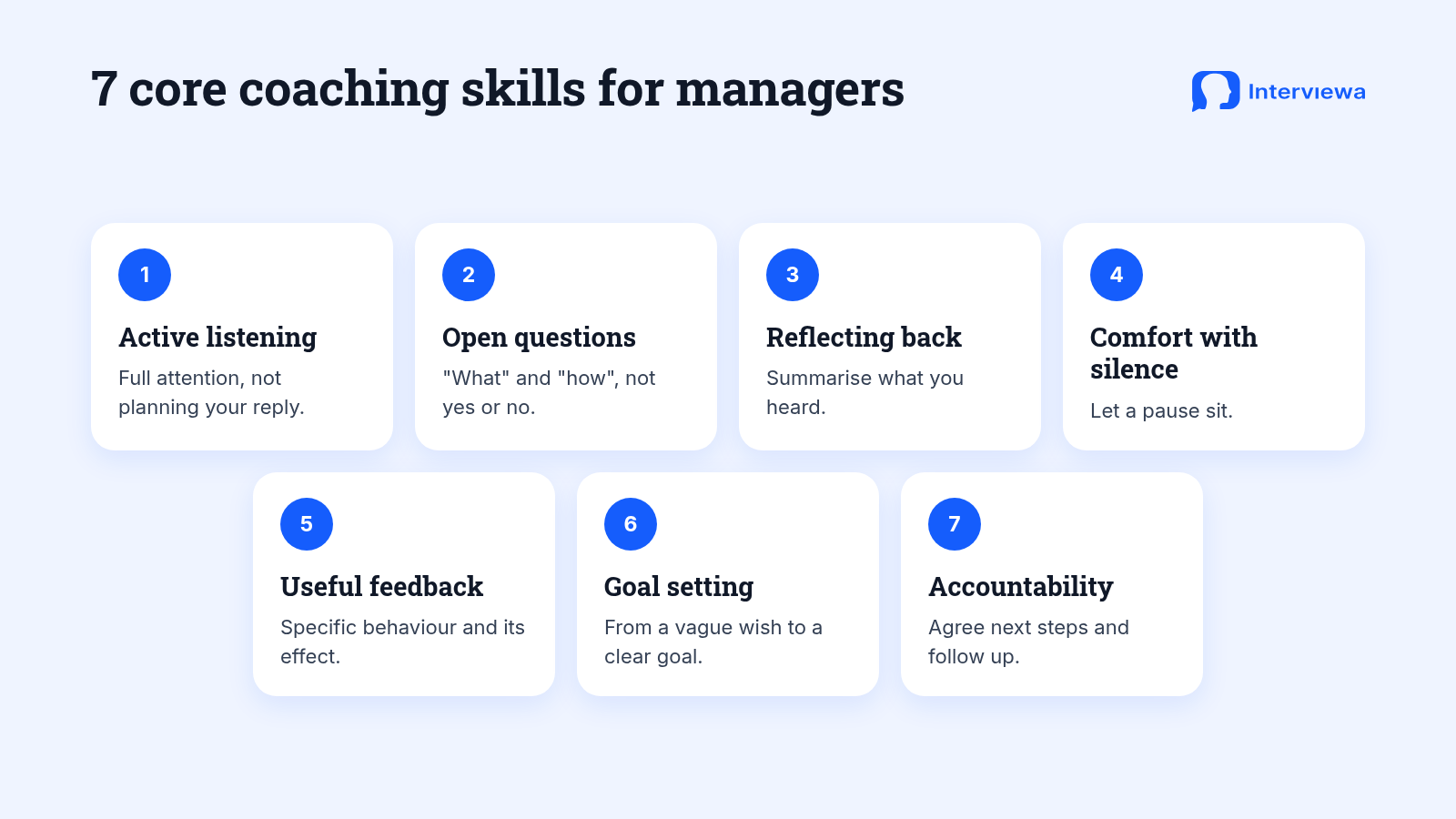
Seven key coaching skills cover most of what a manager needs for leadership development. You do not need to master them all at once.
- Active listening. Giving full attention and showing empathy, not planning your reply while the other person talks.
- Open questions. Asking "what" and "how" questions that invite thinking, not yes or no answers.
- Reflecting back. Summarising what you heard so the person feels understood and can correct you.
- Comfort with silence. Letting a pause sit so the other person can think.
- Useful feedback. Describing specific behaviour and its effect, without judging the person.
- Goal setting. Helping someone turn a vague wish into a clear goal and an action plan.
- Accountability. Agreeing next steps, checking progress and building ownership, kindly and consistently.
How do you check your own coaching skills?
The quickest way is an honest self-check after your next three one-to-ones. Score each line from 1 (rarely) to 5 (almost always).
Coaching skills checklist
- I spoke for less than half of the conversation.
- I asked at least three open questions before offering any advice.
- I summarised what I heard at least once.
- I let at least one silence run without filling it.
- My feedback described what the person did, not what they are like.
- We agreed one clear goal, in the other person's words.
- We agreed what happens next, and by when.
- I followed up on actions from our last conversation.
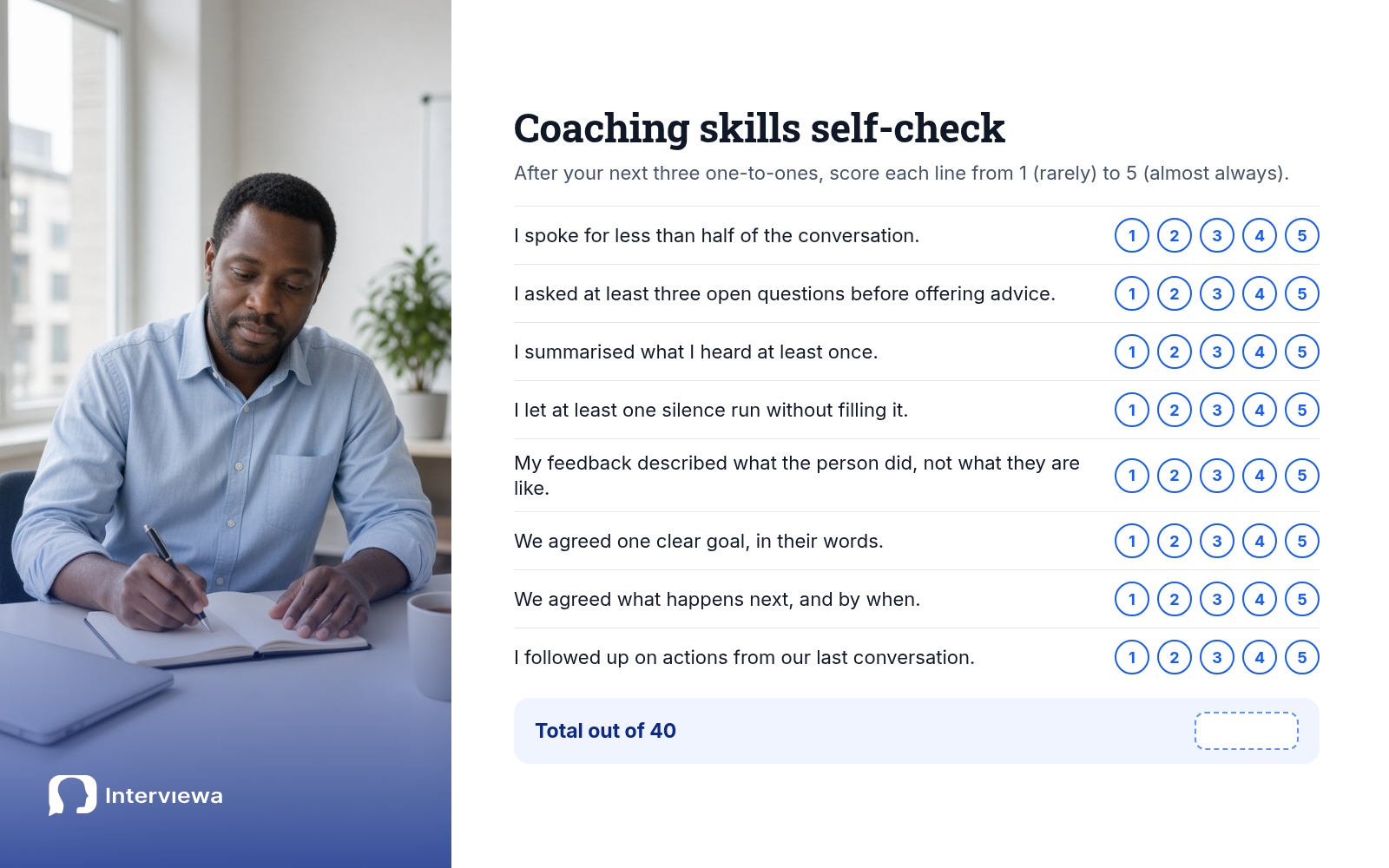
Add up your score. As a rough guide, anything under 24 suggests you are still in "telling" mode more than coaching mode. That is normal. Pick the two lowest lines and focus on those for a month, rather than trying to fix everything at once. Small, steady progress is what creates more productive conversations.
What is the GROW coaching model?
The GROW coaching model is a simple structure with four stages: Goal, Reality, Options and Will. The GROW model gives you a route through the conversation so it does not drift, and helps individuals explore problems and move forward with greater ownership.
According to Performance Consultants, the GROW model was created in the late 1980s and early 1990s by Sir John Whitmore and his peers, and spread widely through his book Coaching for Performance. Here are questions you can use at each stage.
Goal
- What would you like to get out of this conversation?
- What would good look like in three months?
Reality
- What is the current situation?
- What have you already tried, and what happened?
Options
The options stage is where problem solving happens. Resist offering your own ideas too early.
- What could you do? What else?
- If you had no constraints, what would you try first?
Will
The final stage turns ideas into an action plan.
- Which option will you take?
- What is your first step, and when will you do it?
- How will I know you have done it?
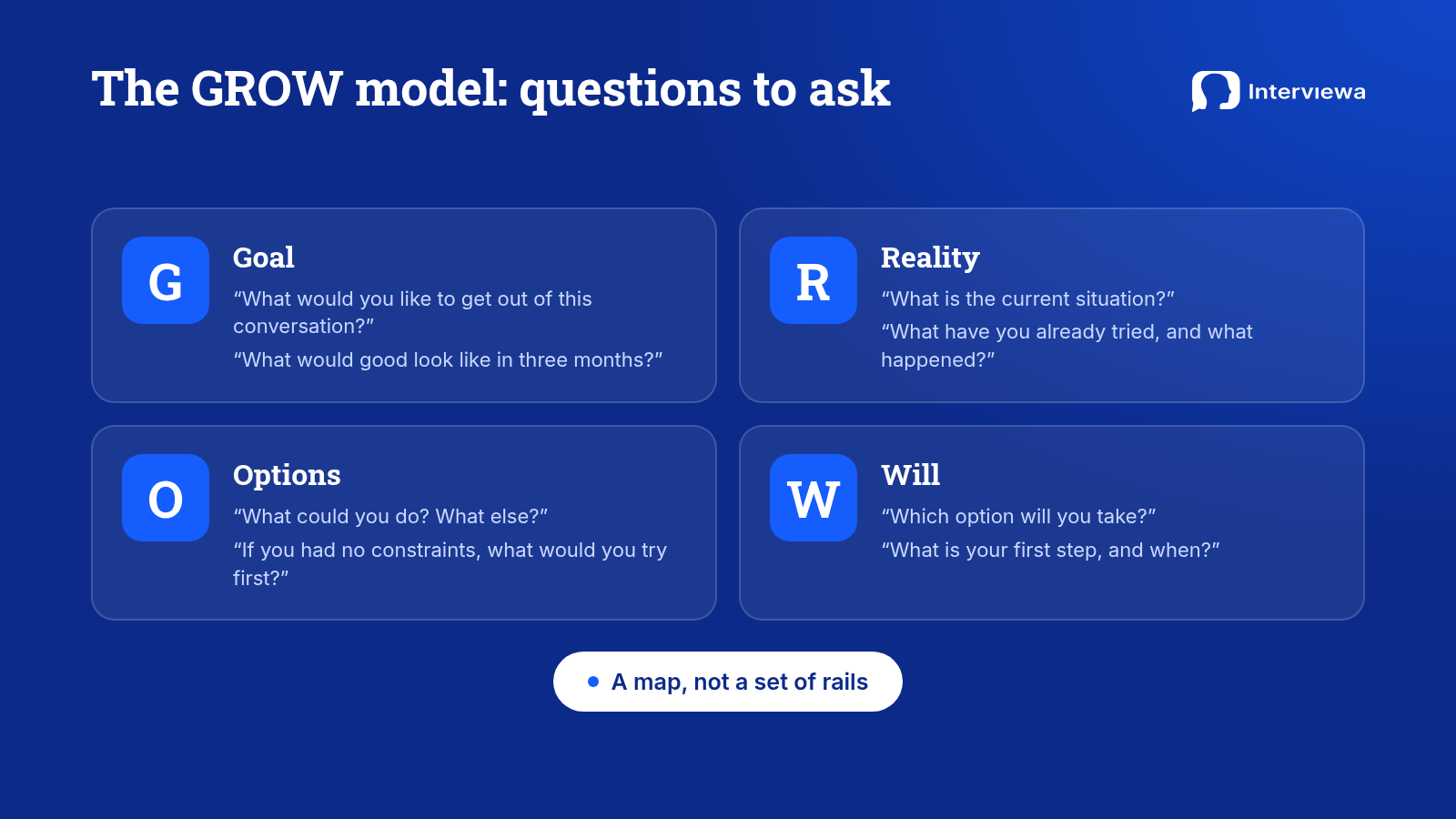
Do not treat the GROW model as a script. Coaching conversations loop back. Someone might reach Options and realise the Goal was wrong. That is fine. The model is a map, not a set of rails.
How do you give feedback as a coach?
Give feedback that is specific, timely and about behaviour. The aim is to help the person see the effect of what they did, so they can choose what to do next.
Many managers use the Situation, Behaviour, Impact (SBI) model from the Center for Creative Leadership. You describe the situation, the specific behaviour you saw, and the impact it had. For example: "In Tuesday's client call, when you summarised their three concerns before answering, the client relaxed and agreed to the next meeting."
Then switch back to coaching. Ask "What do you think worked there?" or "What would you do differently next time?" Feedback opens the door. Questions help the person walk through it.
How can managers practise coaching skills?
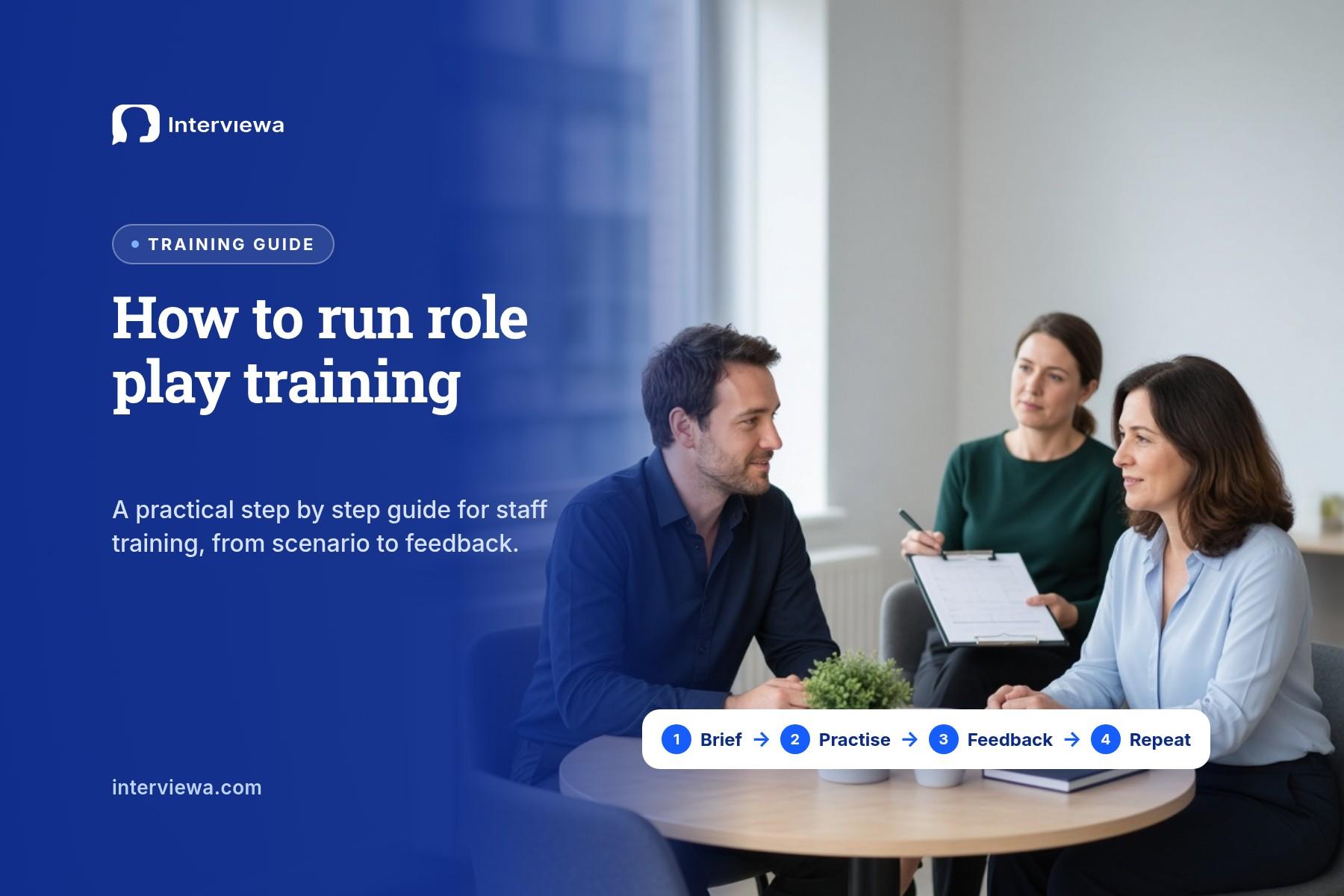
Rehearse out loud, in low-stakes settings, before you need the skill in a hard conversation. Reading and workshops help, but they do not change habits on their own.
Role play is a practical way to build communication skills, because you try the words out loud before the real conversation. You can rehearse with a peer, with a coach, or with an AI role-play partner that lets you repeat the same conversation until it feels natural. With Interviewa Training, you type what you want to train on, such as leadership, and Eve, our AI interviewer, runs a realistic two-way video session and gives you personalised feedback afterwards. It is available any time, so you can rehearse the night before a tough one-to-one.
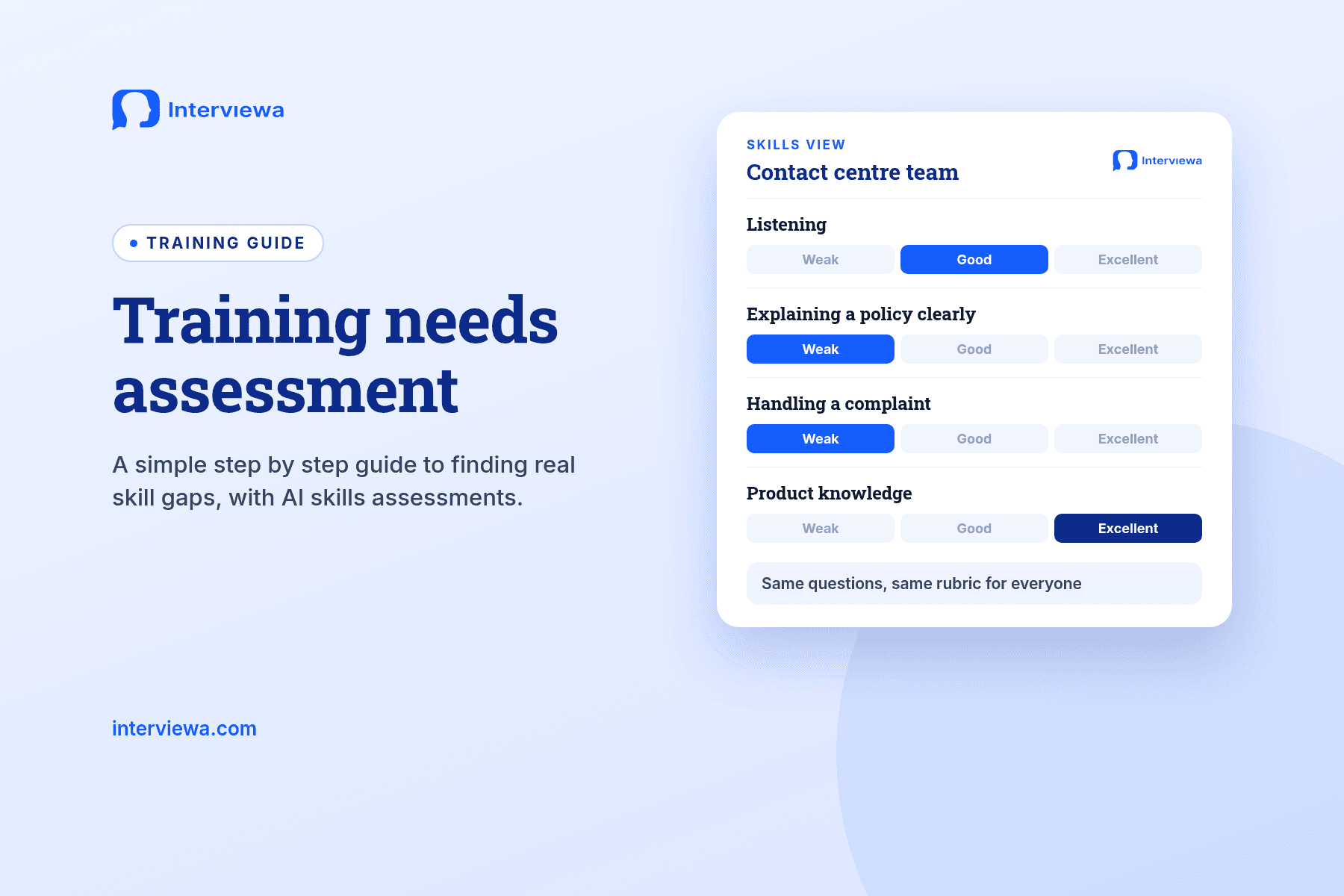
If you are deciding which skills your teams need most, start with a training needs assessment so development time goes where it counts.
Which coaching scenarios should you rehearse?
Start with the conversations you tend to avoid. These five come up for almost every manager.
- The quiet high performer. They are doing well but seem bored. Use Goal questions to uncover their career goals and development opportunities.
- The missed deadline. A usually reliable person has slipped twice. Try Reality questions without sounding like an interrogation.
- The person who wants the answer. They keep asking you to just tell them what to do. Work on holding back and asking "What would you suggest?"
- The defensive reaction. You give feedback and they push back. Focus on staying calm, showing respect, reflecting what you heard and returning to the specific behaviour.
- The career conversation. Someone asks about promotion. Explore Options honestly, without making promises you cannot keep.
For each one, write down the opening line you will use, two open questions and one way you will close the conversation. Then run it out loud at least twice. Over time these meaningful conversations become part of how your team leaders work. Sales managers can apply the same approach to coaching reps through tough calls, such as cold calls. Our guide to objection handling includes role-play scenarios that work well in coaching sessions.
FAQ
What are the 7 key coaching skills?
Active listening, open questions, reflecting back, comfort with silence, useful feedback, goal setting and accountability. Together they help someone find their own answers and act on them.
Is coaching the same as mentoring?
No. A mentor usually shares their own experience and advice. A coach mostly asks questions and helps the person reach their own solutions. Many leaders do a bit of both as part of career development.
How long does it take to build coaching skills?
It varies. If you focus on one or two skills at a time and practise them in every one-to-one, small changes can show within a few weeks. Becoming consistently good takes months of regular one-to-ones and reflection.
What is the GROW model in coaching?
GROW stands for Goal, Reality, Options and Will. It is a four-step structure for coaching conversations, linked to Sir John Whitmore and his book Coaching for Performance.
Can you practise coaching conversations with AI?
Yes. AI role-play tools let you rehearse spoken conversations as often as you like and get feedback, which is useful before a difficult one-to-one or as part of a training programme.
Get started free
The fastest way to improve your coaching skills is to practise them out loud. Get started free with Interviewa Training and rehearse your next difficult conversation with Eve, or book a demo to see how it could work for your managers.